
Last updated November 21, 2026
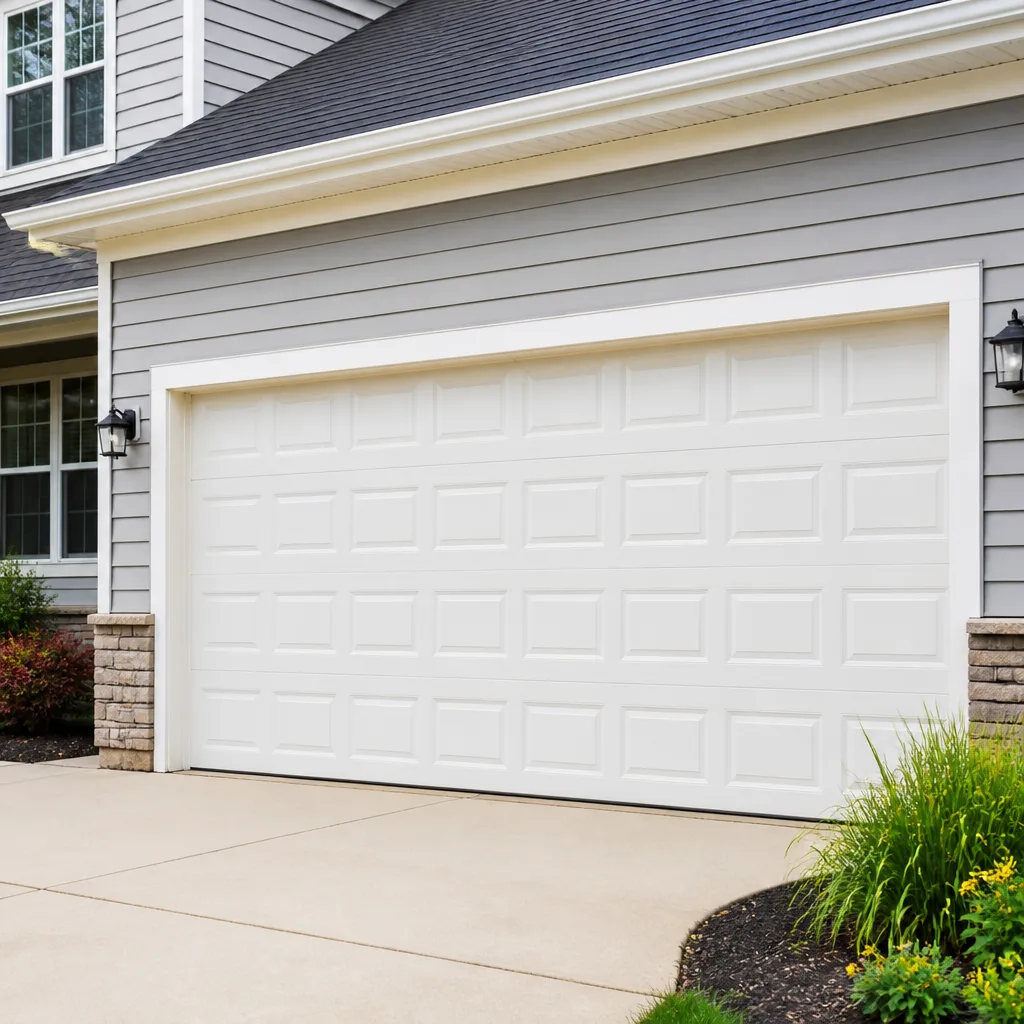 Raised-panel steel
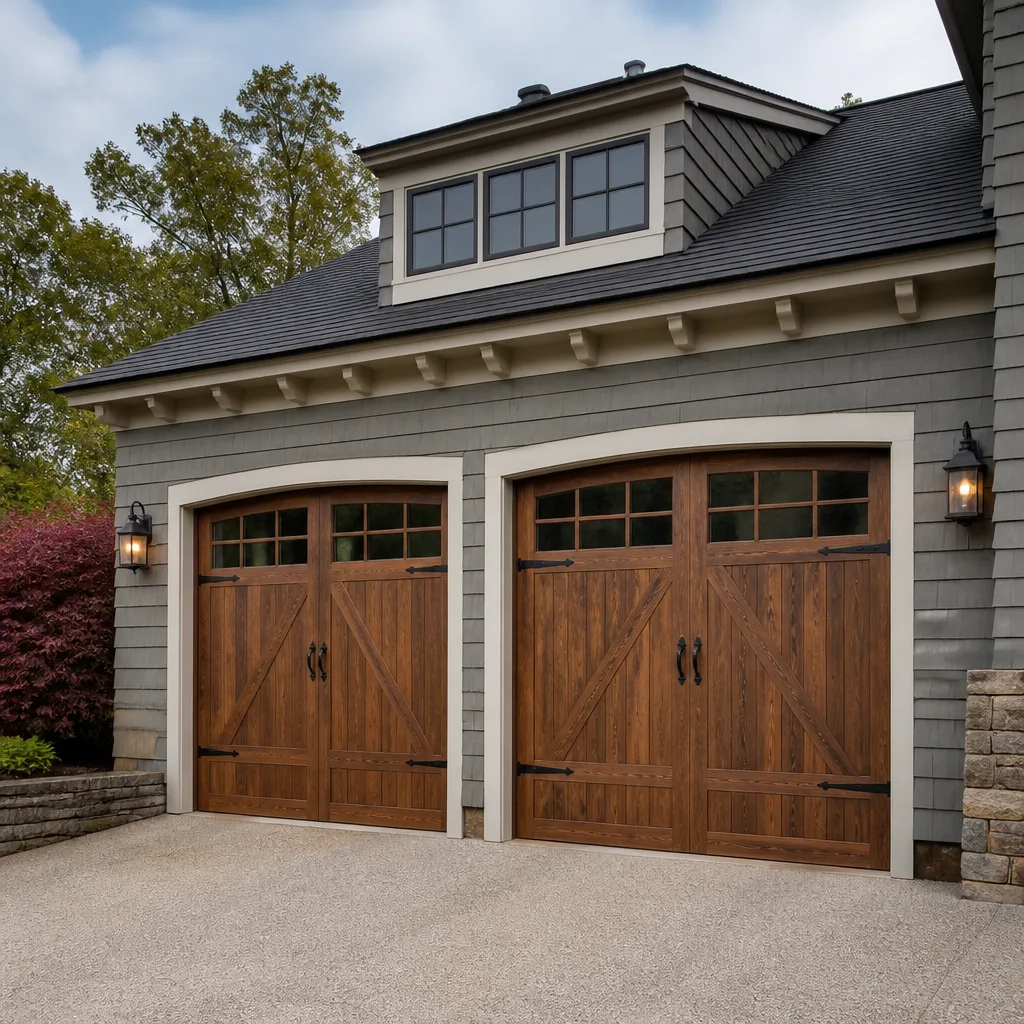 Carriage house
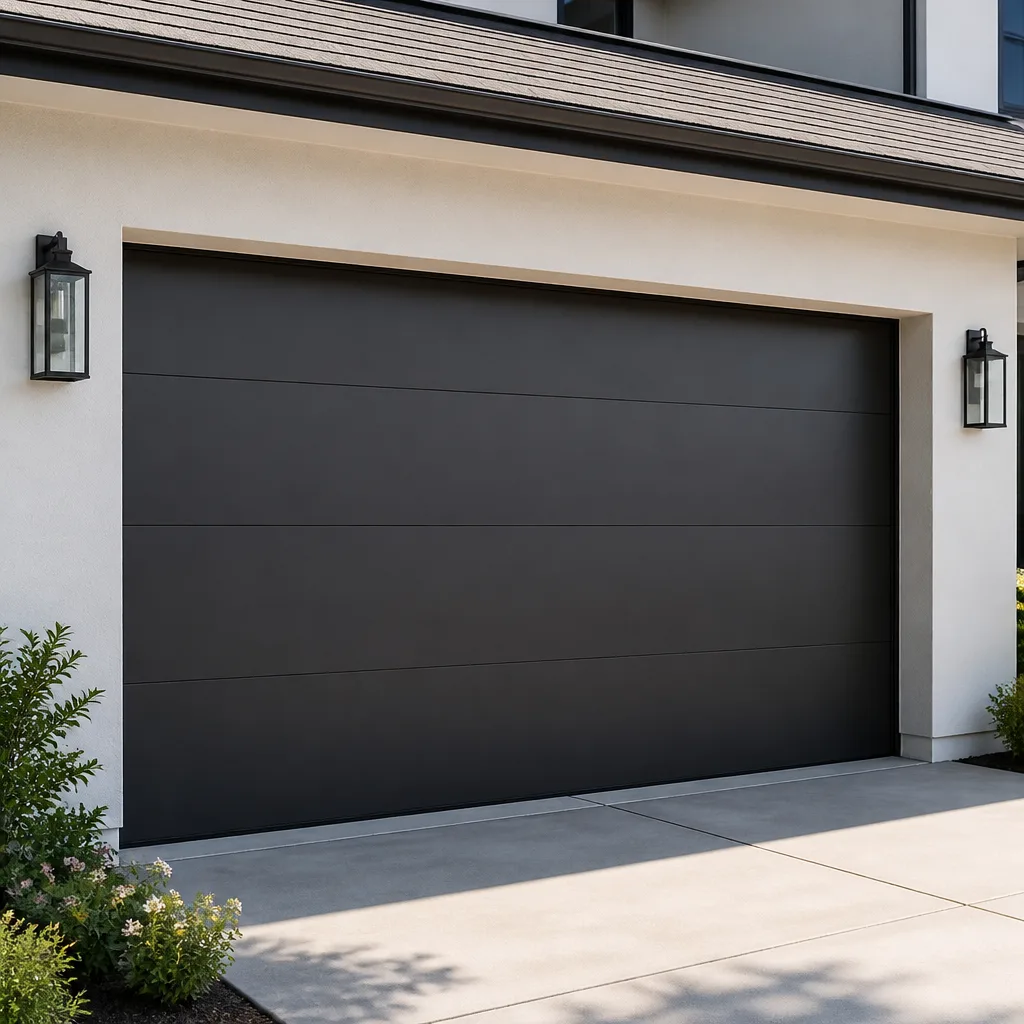 Modern flush
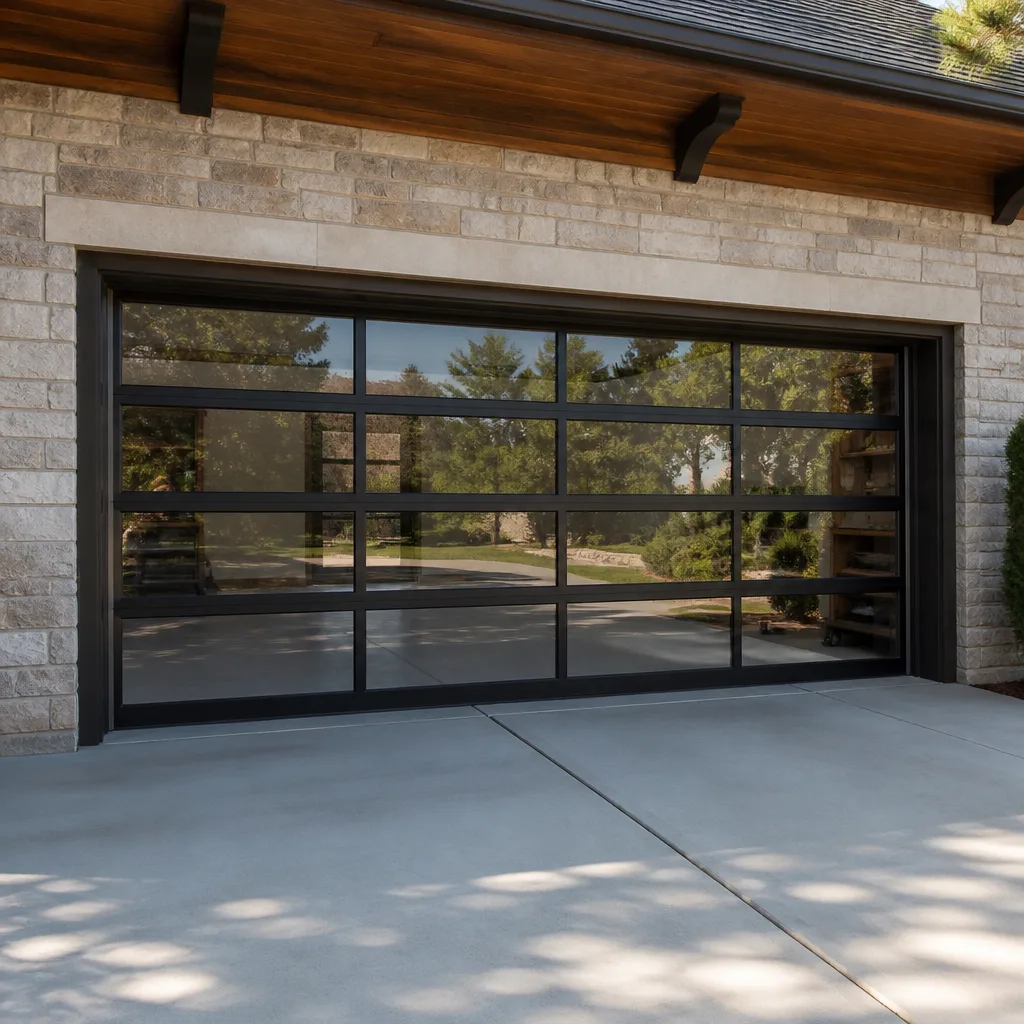 Full-view glass
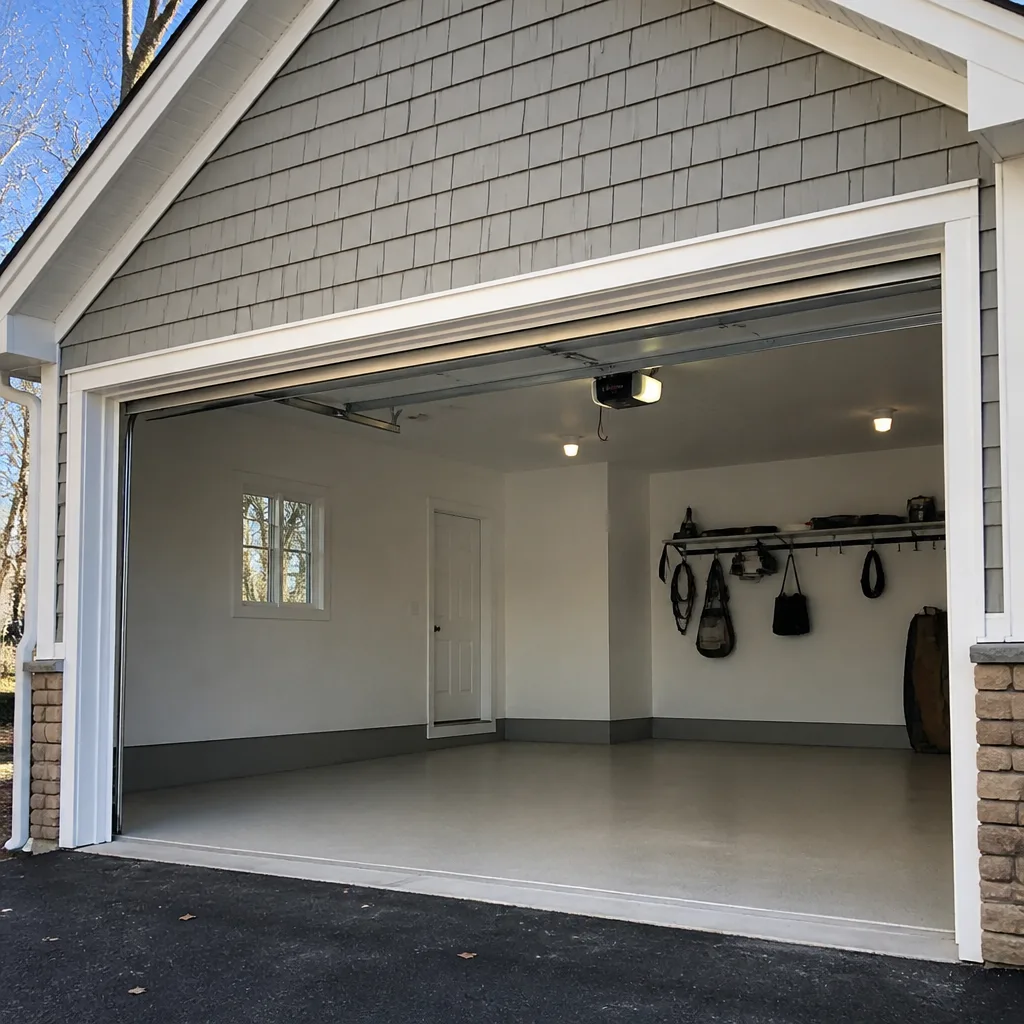 LiftMaster openers
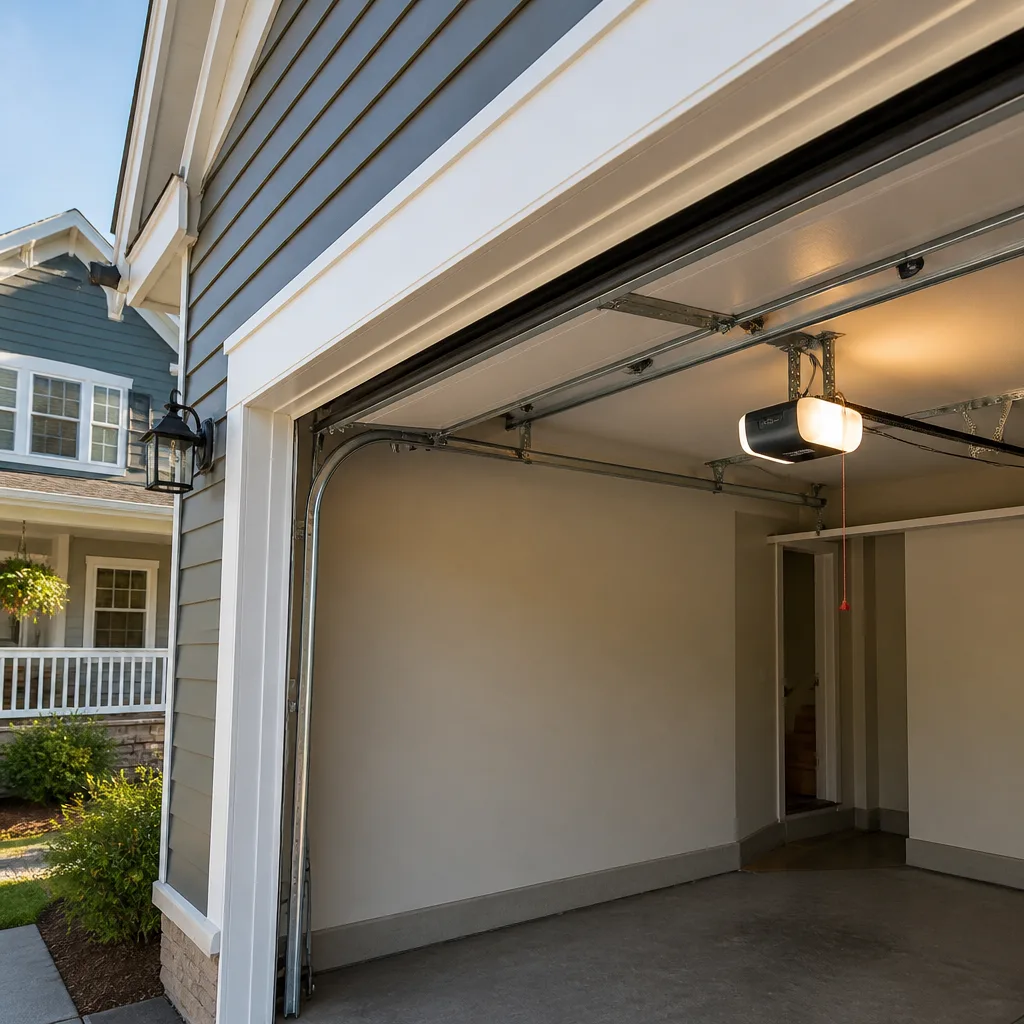 Chamberlain openers
Full 25-point door and opener safety check with every visit - springs, cables, rollers, tracks, and your LiftMaster or Chamberlain opener included
You get a price before we start. It does not change when the pro arrives.
Get your free estimateHow to Hire a Garage Door Contractor in Norfolk: A Step-by-Step Guide
Here’s the hiring mistake we see most often in Norfolk: homeowners check the license, compare two quotes, and call it done. But the contractor who shows up with one spring size in the van, one opener brand they know well, and a phone full of subcontractors is the one who turns a same-day repair into a two-trip job. Garage doors are a system where the spring has to match the door’s weight exactly, and general handymen are set up for everything except the one thing your door actually needs. This guide teaches you to screen for genuine specialists, starting before you pick up the phone.
Quick Answer
To hire a garage door contractor in Norfolk, verify their Virginia contractor license, ask what spring wire diameters and opener brands they stock, and get a written quote that ties the spring to your door’s weight. Screen for single-trade specialists, not general handymen who list garage doors as a side service. Confirm insurance covers both general liability and the electrical side of opener work before anyone touches your door.
Styles & brands we work with
- Raised-panel steel
- Carriage house
- Modern flush
- Full-view glass
- LiftMaster openers
- Chamberlain openers
Table of Contents
- Why Specialists Beat Generalists
- Verifying a Virginia Contractor License
- Inventory Depth as a Vetting Signal
- Reading a Garage Door Quote
- Evaluating Reviews for Garage Door Work
- Insurance Coverage You Need to Confirm
- The Questions to Ask on the Phone
- Common Mistakes to Avoid
Why Garage Door Specialists Beat General Handymen
A garage door contractor who does only garage doors will show up with a van organized around this one trade. That sounds minor until you understand what it means for your job. A general handyman working on fences, pressure washing, and garage doors has to stock for all three. A specialist stocks for one.
In our experience, the first thing that fails in a generalist’s truck is spring inventory. Torsion springs come in different wire diameters because they have to match your door’s weight and height. A door that’s heavier than average needs a thicker wire. A door that’s lighter needs a thinner one. If the contractor carries one or two sizes and your door falls outside that range, they either install the wrong spring or they come back a second time with the right one. Either way, you’re paying for the mismatch.
The same problem shows up with openers. Norfolk has a wide mix of opener brands in its older homes and newer builds: LiftMaster, Chamberlain, Genie, Craftsman, and others. A contractor who only works on one or two brands will hand off anything else to a subcontractor, which adds a middleman and a markup.
Here’s the test: ask what brands they service. A specialist names several without hedging. We service equipment from eight major manufacturers, including LiftMaster, Chamberlain, Genie, Clopay, Amarr, Wayne Dalton, Craftsman, and Raynor. If a contractor can only name one or two, ask what happens when yours isn’t on the list. The answer tells you whether they’ll take the job or pass it along.
Verifying a Virginia Contractor License
Virginia doesn’t issue a license for garage door work specifically. Garage door contractors fall under the general contractor licensing structure, and the class matters for the size of job they can legally take.
Virginia contractor licenses come in three classes, and each one caps the value of individual projects the contractor can accept:
- Class A: no dollar cap on individual projects
- Class B: capped on any single project
- Class C: the lowest cap
For a standard residential garage door repair or replacement, a Class B or Class C license covers the work. A larger installation might need Class A. Ask the contractor for their license number and class before you book. Then check it through the Virginia Department of Professional and Occupational Regulation (DPOR) license lookup, which is a public, searchable database. That’s the only way to know the number is real and the license is active.
What the class means in practice: if your project is near or above the cap for their class, they can’t take it legally, so they’ll either decline or subcontract the work. Neither is what you want. The class check takes two minutes and rules out the contractors who shouldn’t be quoting your job at all.
If the door has failed on a Friday, call anyway. We answer 24/7, and the call gets booked into the next dispatch window, Sunday through Friday, 7am to 7pm. We’re closed Saturday.
Inventory Depth as a Vetting Signal
Inventory depth is the most telling question you can ask a garage door contractor, and almost no homeowner asks it. Here’s what to ask, in plain terms:
- “Do you carry multiple spring wire diameters?” The right spring is determined by your door’s weight and height. A contractor with two or three sizes will sometimes use the wrong one. A contractor with a full range can match your door on the first visit.
- “Which opener brands do you service?” If they only name one, they’ll subcontract anything else. Ask specifically about smart-home and app-connected units, since older openers and newer Wi-Fi units fail in different ways.
- “Do you stock replacement parts, or do you order them?” Same-day part availability is the difference between a same-day repair and a two-week wait. Ask whether they can get a specific part today or whether they have to order it.
- “Can you handle spring replacement and opener repair on the same visit?” If they say no, the job splits into two calls and two invoices.
- “Do you have the equipment to measure door weight on-site?” A specialist can. A handyman often can’t, which is why they guess and guess wrong.
For a Norfolk door, the match between spring and door matters more than in most places. This part of Virginia sits at sea level, and garage doors here go through humid summers and mild but variable winters. A spring that’s slightly overtensioned or made of the wrong wire will fatigue faster in that cycle, and you’ll be back on the phone a year or two later. Spring repair done with the right wire the first time is cheaper than a second repair.
Reading a Garage Door Quote
A garage door quote should be written down, itemized, and specific to your door. The quote that’s just a verbal range over the phone tells you nothing about what’s included.
What a proper quote includes:
- Spring size, not just “spring replacement”: the wire diameter and length need to match your door’s weight and height. If the quote doesn’t mention size, ask how they determined it.
- Disposal fees: old springs, hinges, rollers, and openers all have to be hauled away. If the quote doesn’t say who takes them, you’ll likely be charged separately.
- Labor, itemized: “labor included” is a warning sign. Labor differs for a spring swap versus a full opener replacement versus a door install. The quote should tell you what labor covers.
- Part brands: if the quote doesn’t name the brand, ask. You should know whether you’re getting a lift or control component with a proven track record.
- Written confirmation of the final price: the estimate is an estimate; the written quote sets the price. Get it in writing before any work starts.
For a ballpark, typical estimated ranges for garage door work in the Norfolk market:
- Single spring replacement: $180-$340, one spring
- Matched spring pair: roughly double the single-spring range, since a pair is usually replaced together
- Opener repair: varies by fault and part; quoted per job
- Full door installation: quoted per door after a measure
Those are typical estimates, not final prices. The written quote for your door is the price you pay. Ask for the quote in writing, and ask what the estimate includes before you agree.
If you’re comparing quotes, the red flag isn’t a higher number, it’s a number with no detail under it. A flat-rate spring quote that doesn’t account for your door’s weight is a guess dressed up as a price. A quote that omits disposal is hiding a fee. A quote with vague labor language is the one most likely to grow by the time the invoice arrives.
Evaluating Reviews for Garage Door Work
Online reviews for garage door contractors should be read differently from reviews for a general handyman. The level of detail is what tells you the difference.
A useful garage door review names the specific problem: a broken torsion spring, a door that came off its track, an opener that lost its Wi-Fi connection, a snapped cable. It mentions the technician’s diagnosis or the part that was used. Those details are hard to fake, and they tell you the reviewer actually watched the work happen.
A less useful review says only “great job, fast service, friendly tech.” Those are fine, but they don’t distinguish a garage door specialist from a handyman who did an okay job on a simple fix.
What to look for:
- Specific failures named: springs, cables, tracks, openers, panels, hinges
- Brand mentions: the reviewer names their opener or door brand, and the contractor had the part
- Repeat business: the reviewer had work done before and called again
- Consistent detail across multiple reviews: one detailed review could be luck; three or four suggest a real pattern
Read the lowest reviews too. A one-star review that says “they couldn’t get the part for my brand” tells you more about inventory depth than a hundred five-star reviews that say nothing specific. In Norfolk, where the housing stock includes a lot of older doors and a mix of opener generations, that kind of review is worth reading carefully.
Insurance Coverage You Need to Confirm
General liability insurance alone is not enough for garage door work, and this is where a lot of homeowners stop checking too soon.
Two separate coverages matter here:
- General liability: covers damage to your property or injury to someone on your property during the work. If a technician drops a panel and damages your car, or a door comes down on someone, general liability is what responds.
- Workers’ compensation: covers the technician if they’re injured on your job. Without it, an injury on your property can turn into a claim against your homeowner’s policy.
Garage door work also involves electrical connections on openers, and this is the part most homeowners miss. A contractor who only carries general liability may not be covered for the electrical side of opener installation or repair. Ask whether their coverage extends to the electrical work. A specialist should be able to confirm it without hesitating.
The risk here isn’t hypothetical. Garage door springs are under high tension, and a failure during replacement can cause serious injury. This is genuinely dangerous work, and it’s one of the reasons a trained specialist matters. We don’t recommend attempting spring replacement yourself, and you shouldn’t hire someone who treats it like an easy job.
Ask each contractor for a certificate of insurance before booking. If they can’t produce one, that’s the end of the conversation.
The Questions to Ask on the Phone
The phone call is where you sort candidates fastest. These are the questions that separate specialists from generalists:
- “What’s your Virginia contractor license number and class?” Note it down and look it up before booking.
- “Do you service LiftMaster, Chamberlain, Genie, and Craftsman openers?” The answer tells you whether they’re set up for modern smart-home units or only legacy mechanical ones.
- “What spring sizes do you carry, and how do you match the spring to my door?” If they can’t explain the weight-matching process, they’re guessing.
- “Can you do the repair in one visit, or will it take two?” Two visits is the generalist’s pattern, and it costs you more than the second trip.
- “Is the quote written, and does it include disposal and labor?” Get the answer in writing, not just verbally.
- “What does the estimate cover, and is the final price set before work starts?” The written estimate should answer this.
- “Are you insured, and does your coverage include electrical work on openers?” Ask for a certificate.
For a full-service specialist, you should also be able to ask about garage door opener repair and garage door installation without getting a referral elsewhere. If the contractor can only do one of those, they’re a partial specialist, and the gaps will show up eventually.
Common Mistakes to Avoid
- Hiring a general handyman who lists garage doors as a side service. He stocks one spring size and works with one opener brand. Anything outside that range gets subcontracted. Garage doors are a system, and a generalist isn’t set up for the system.
- Accepting a flat-rate spring quote that doesn’t mention your door’s weight. The spring has to match the door. A flat rate for every door means the contractor isn’t matching anything. Ask how they determined the size.
- Skipping the license check. Virginia contractor licenses are public record through DPOR. Two minutes of lookup rules out the contractors who shouldn’t be quoting your job.
- Confirming general liability and stopping there. Workers’ compensation and electrical coverage on opener work are separate. Ask about all three.
- Not asking about disposal and labor in the quote. Both are common places for the final invoice to grow past the verbal estimate. Get them in writing.
- Reading reviews that don’t name the problem. A review that says “great job” tells you nothing about technical depth. Look for reviews that name the part, the brand, or the diagnosis.
- Calling on a Saturday expecting service. We’re closed Saturday. A door that fails on a Saturday gets booked for Sunday, and a door that fails earlier in the week gets handled faster.
See the difference
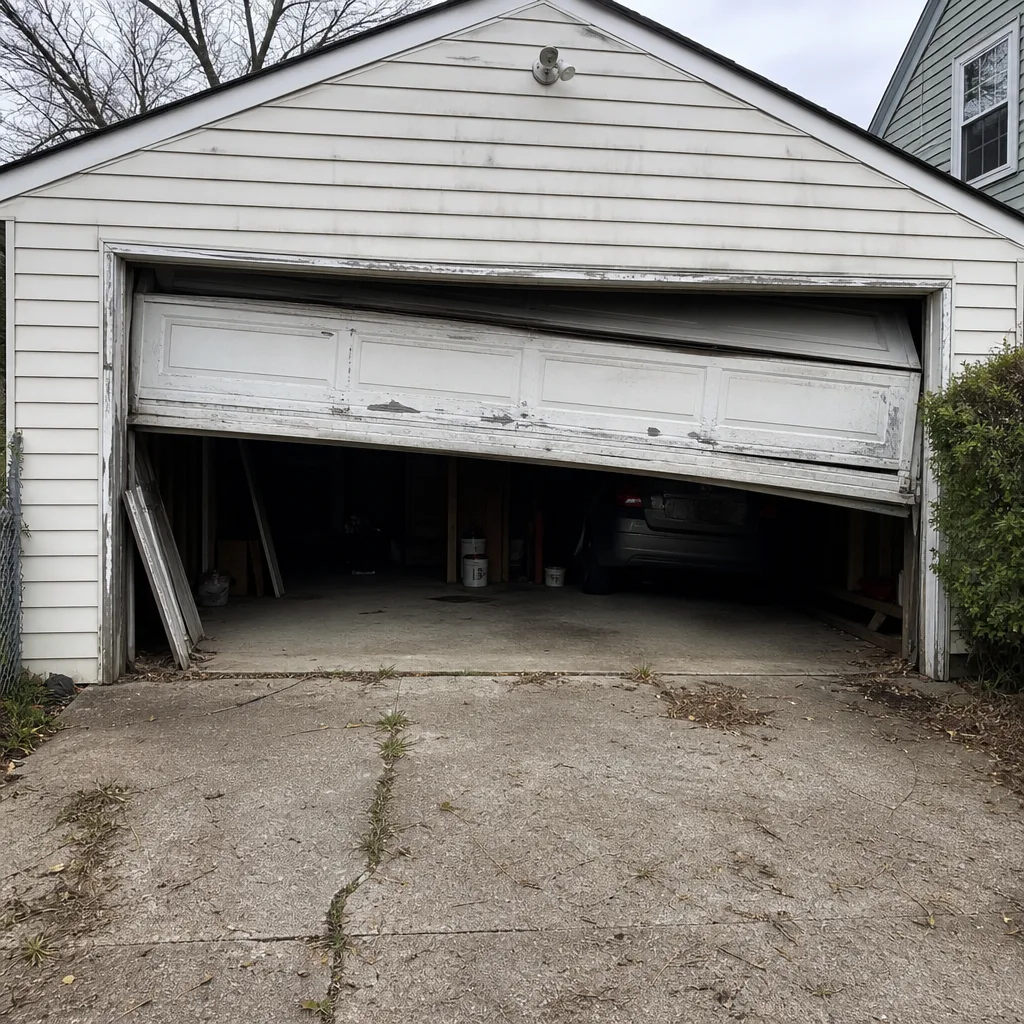 Before
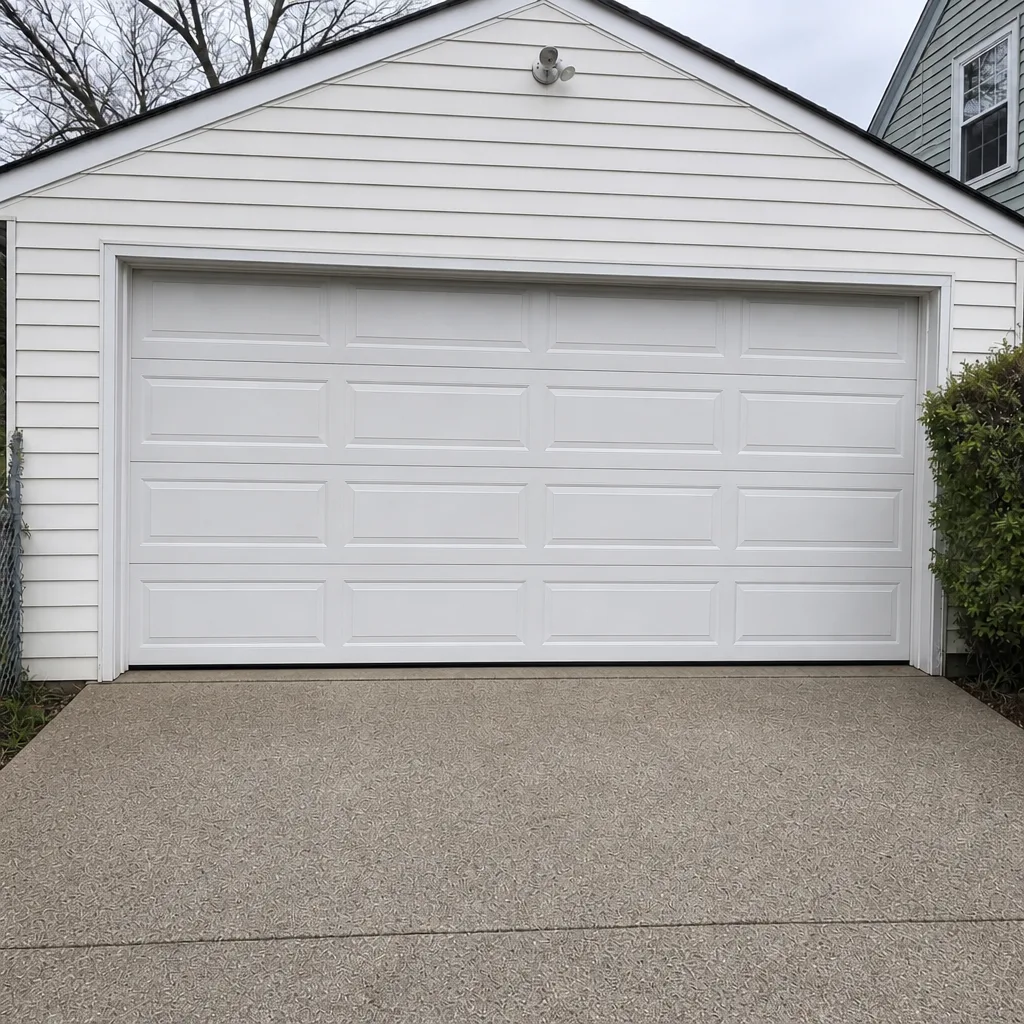 After
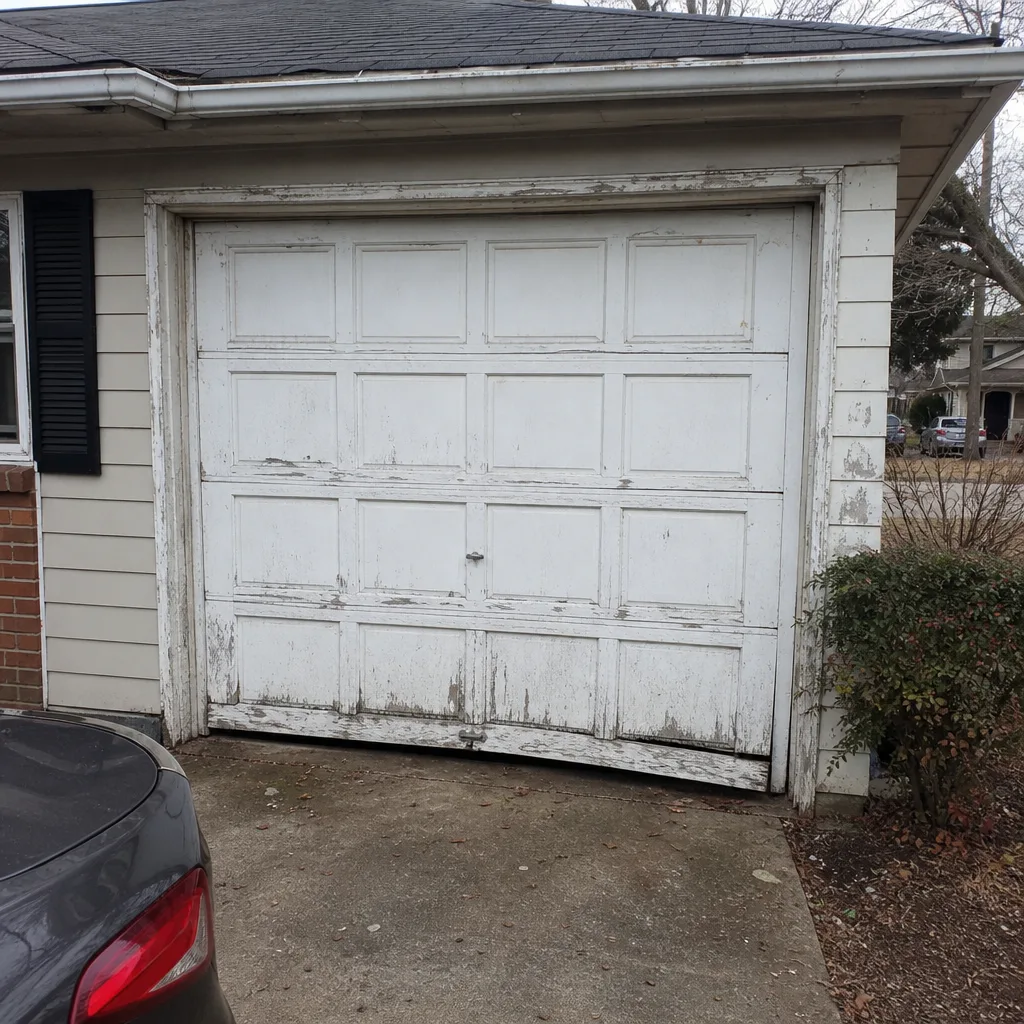 Before
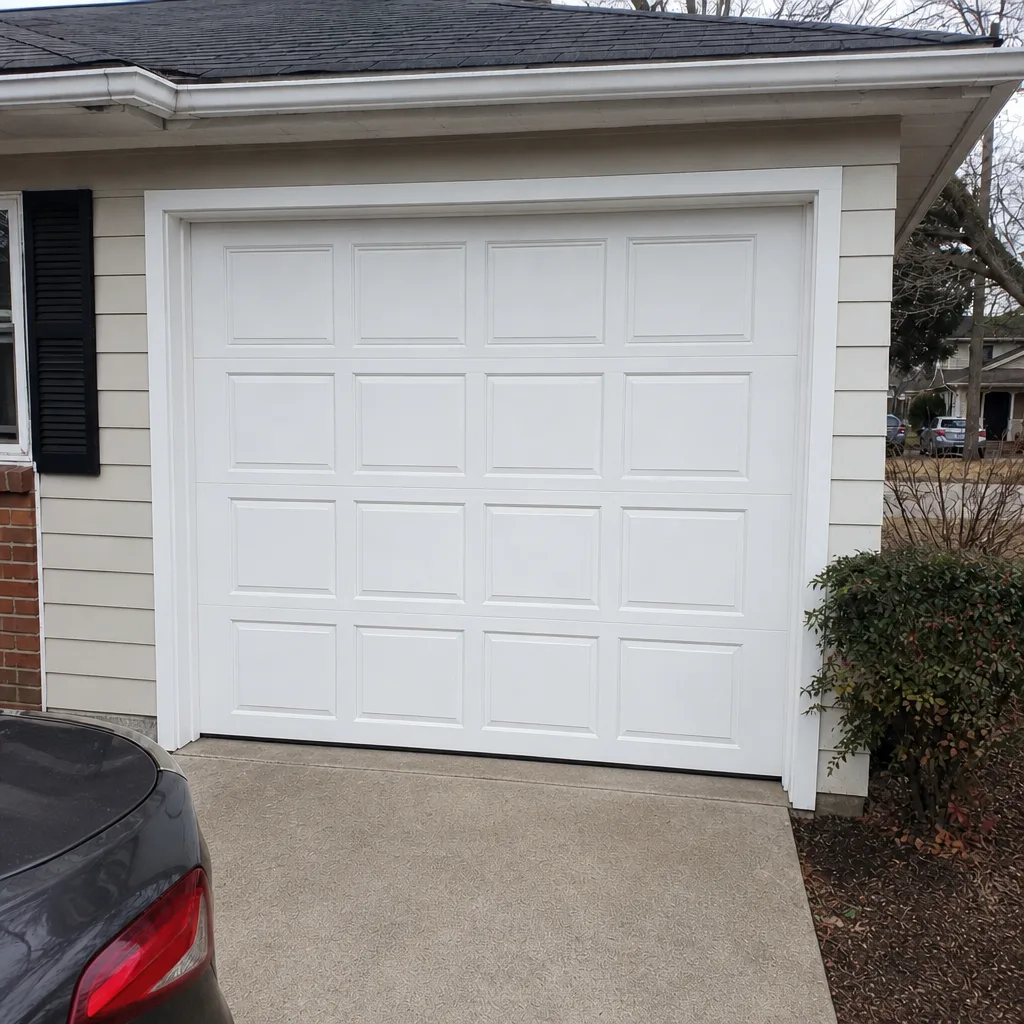 After
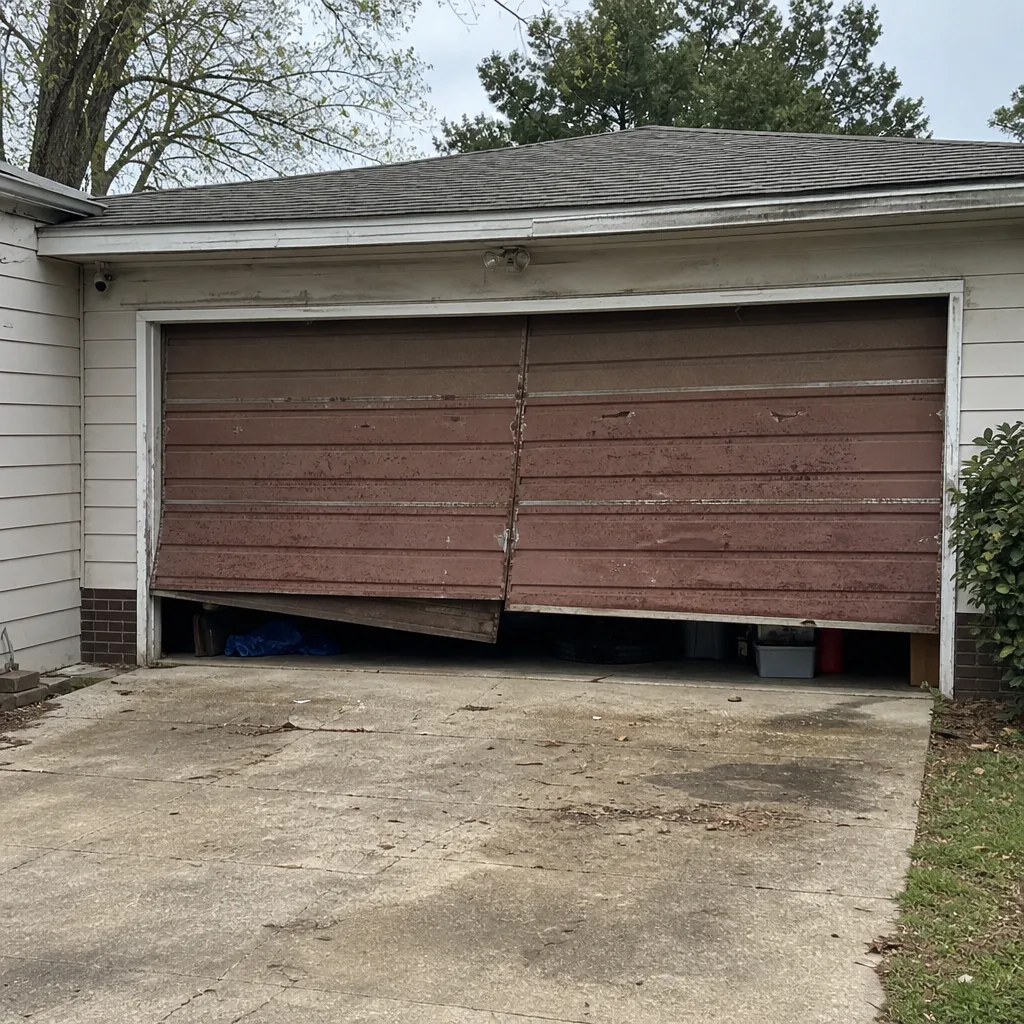 Before
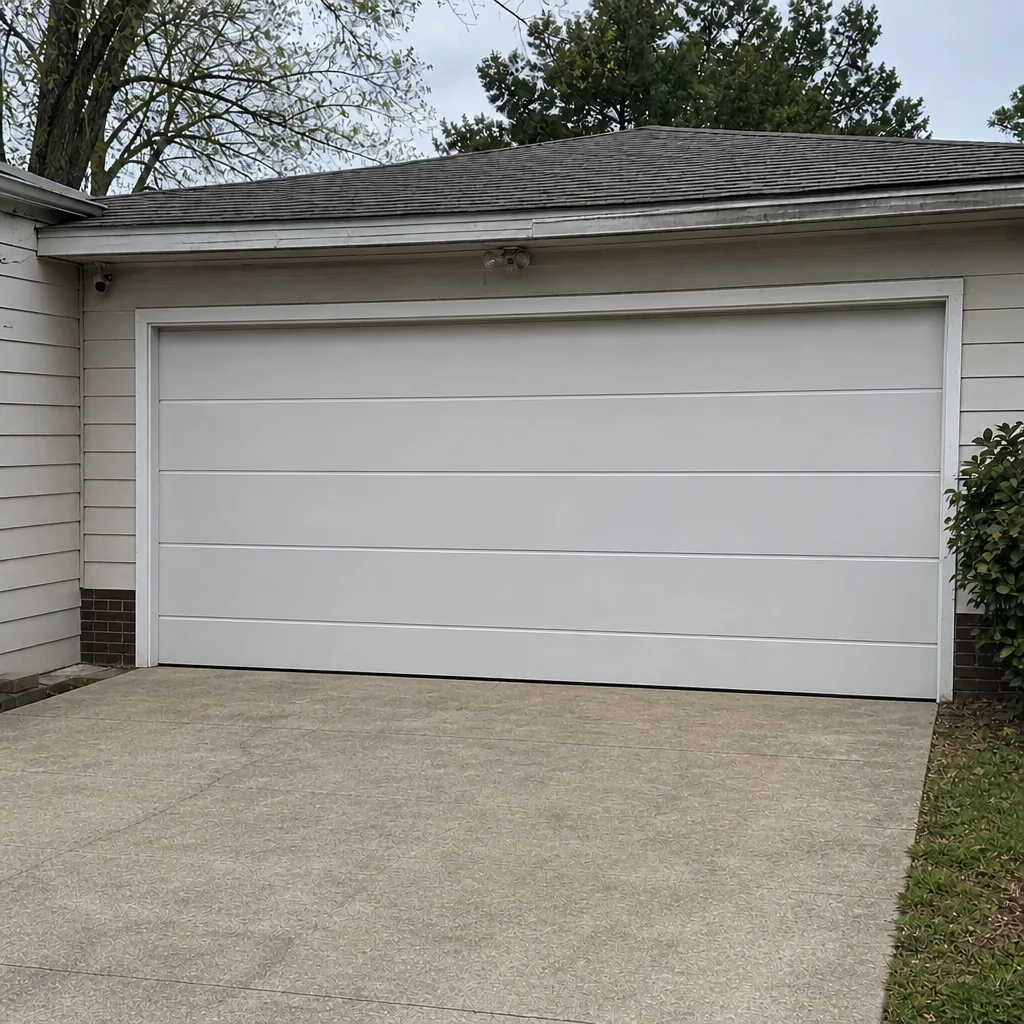 After
When to Call a Professional
Call a professional when the problem involves springs, cables, or openers. A garage door that won’t lift, lifts unevenly, or slams down is a system failure, not a loose hinge. A door off its track can injure someone. A broken torsion spring is under enough tension that a mistake during replacement can cause serious injury. An opener that sparks, smells hot, or won’t respond to the remote is an electrical problem that needs diagnosis, not a guess. These are the jobs where the generalist costs you more in the long run, either through a second visit or a second repair.
If you’re outside those cases, or you’ve had a door fail on a Sunday through Friday, call. Norfolk Garage Door Repair Experts offers free estimates in Norfolk. Call (844) 443-3797. We answer 24/7. Fast dispatch from 7am to 7pm, Sunday through Friday.
Frequently Asked Questions
Ask for their Virginia contractor license number and class, then look it up through the Virginia Department of Professional and Occupational Regulation (DPOR) public database. The class (A, B, or C) caps the value of projects they can legally take, so it also tells you whether they’re licensed for your job size. If they can’t give you the number, don’t book them. Call (844) 443-3797 for a free estimate.
They can try, but it’s the wrong hire. Springs are matched to door weight and height, and a handyman who carries one or two wire diameters may install the wrong one or need a second trip. Torsion springs are under high tension, and replacement is genuinely dangerous work. Call (844) 443-3797 for a free estimate from a specialist.
A proper quote names the spring size or part, lists disposal and labor separately, names the part brand, and gives a written final price. A flat-rate spring quote that doesn’t account for your door’s weight is a guess, not a quote. Ask for it in writing before any work starts. Call (844) 443-3797 for a free estimate.
No. The written quote sets the price, and it’s agreed before any work starts. The estimate walk-through is where the technician confirms the fault, the part, and the scope, and the quote reflects what they find. If the scope changes, you’ll know before work begins. Call (844) 443-3797 for a free estimate.
The local pro we connect you with is licensed and insured as Virginia requires. Ask each contractor for a certificate of insurance before booking, and confirm coverage extends to the electrical side of opener work, not just general liability. Call (844) 443-3797 for a free estimate.
We’re closed Saturday. We’re open Sunday through Friday, 7am to 7pm. If the door fails on a Saturday, call and we’ll book the visit for Sunday. Call (844) 443-3797. We answer 24/7.
Look for reviews that name the specific problem: a torsion spring, a snapped cable, a door off its track, an opener that lost its Wi-Fi link. A review that names the brand and the part suggests the reviewer watched real technical work. Read the lowest reviews too; a “they couldn’t get my part” review tells you about inventory depth. Call (844) 443-3797 for a free estimate.
Typical estimated ranges: a single spring replacement runs $180-$340 per spring, and a matched pair is usually replaced together at roughly double that. Opener repairs and full installations are quoted per job after the measure. The written quote sets the final price. Call (844) 443-3797 for a free estimate.
The Bottom Line
The hiring decision comes down to whether the contractor is set up for garage doors specifically or garage doors as one line on a longer list. Verify the Virginia license and class through DPOR. Ask what spring sizes they stock and which opener brands they service. Get a written quote that ties the part to your door’s weight and lists disposal and labor separately. Confirm insurance covers opener electrical work, not just general liability. Read reviews for technical detail, not praise. And if the door fails, call rather than wait: we’re at (844) 443-3797, we answer 24/7, and fast dispatch runs 7am to 7pm, Sunday through Friday.
Written by the team at Norfolk Garage Door Repair Experts.