
Last updated November 21, 2026
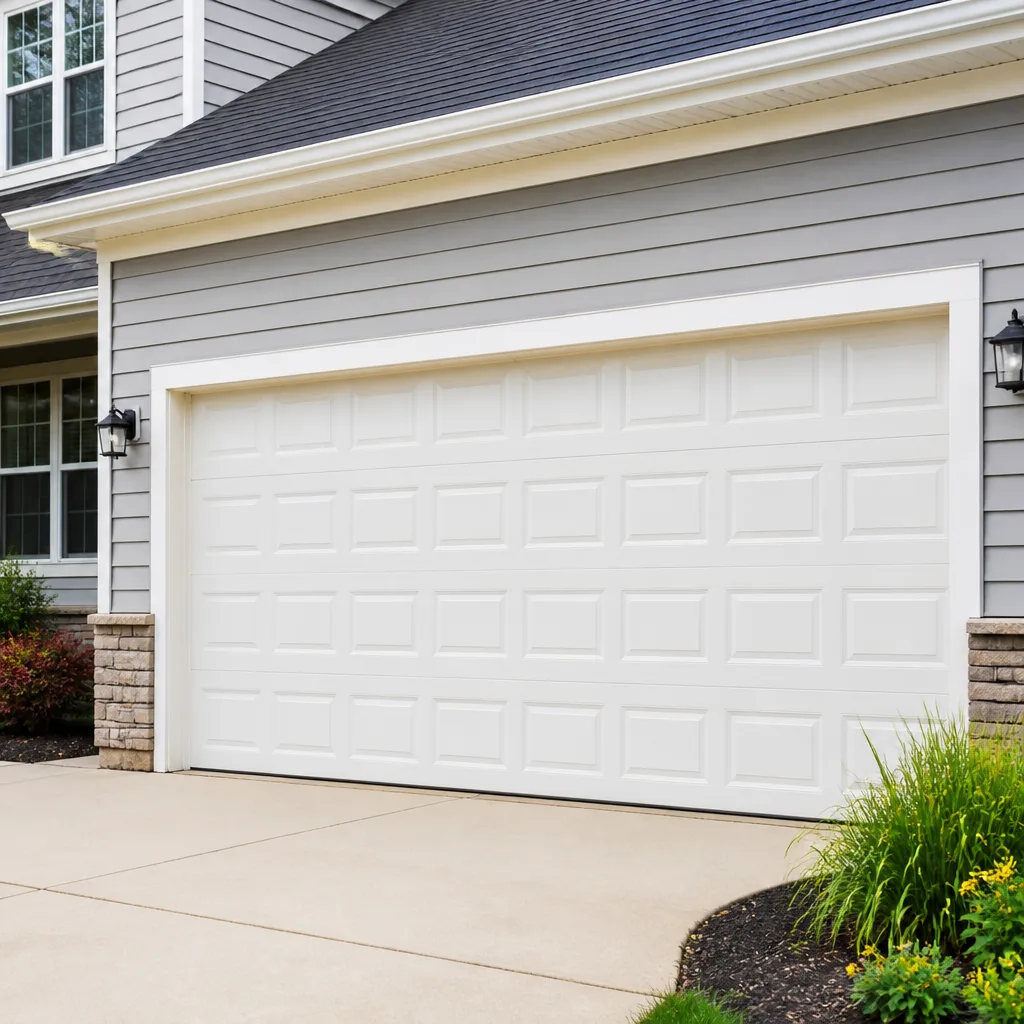 Raised-panel steel
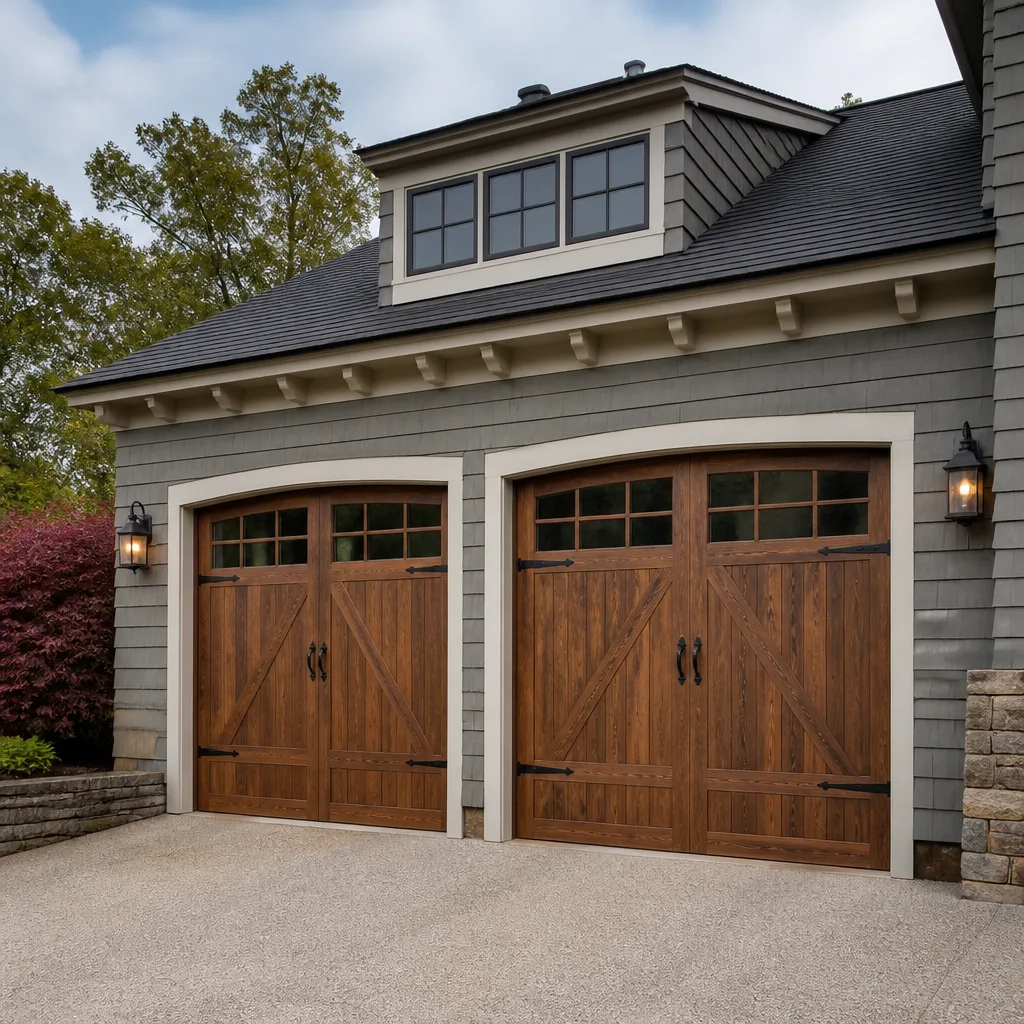 Carriage house
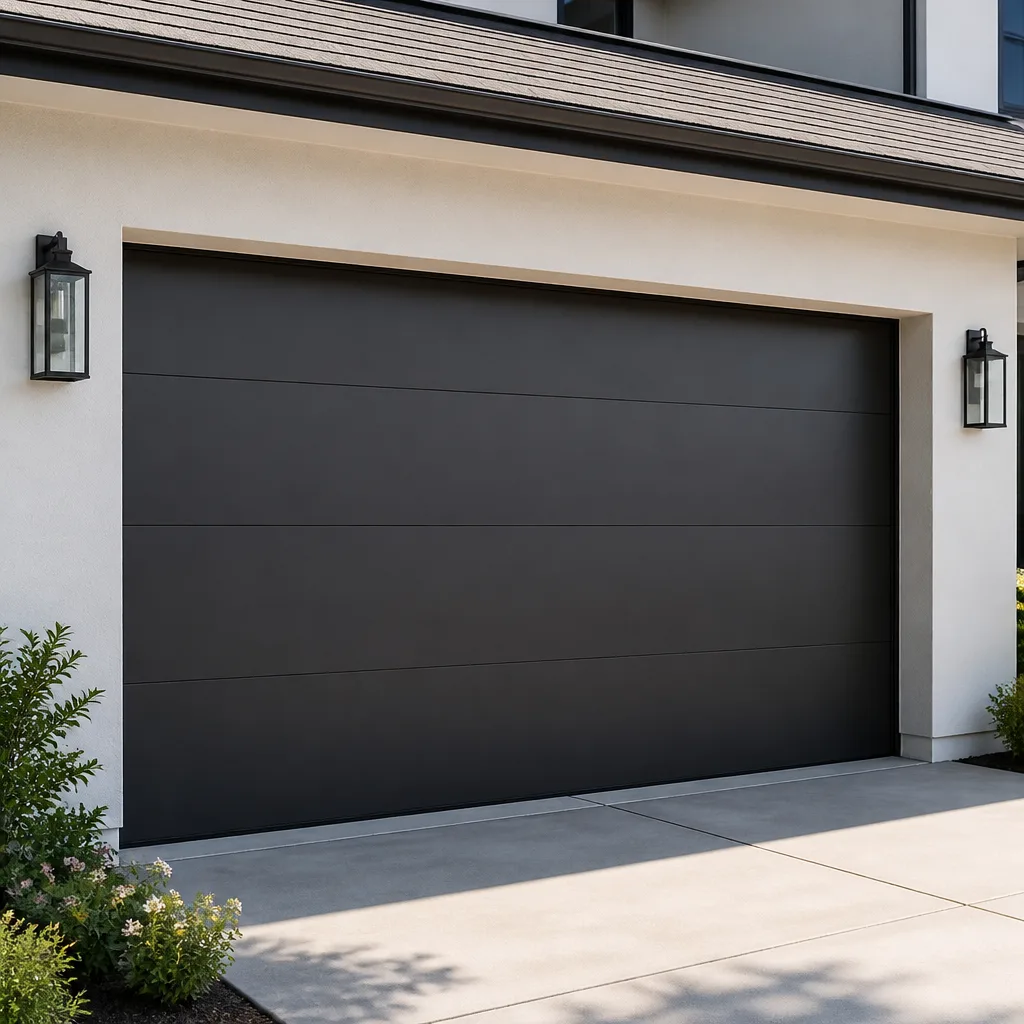 Modern flush
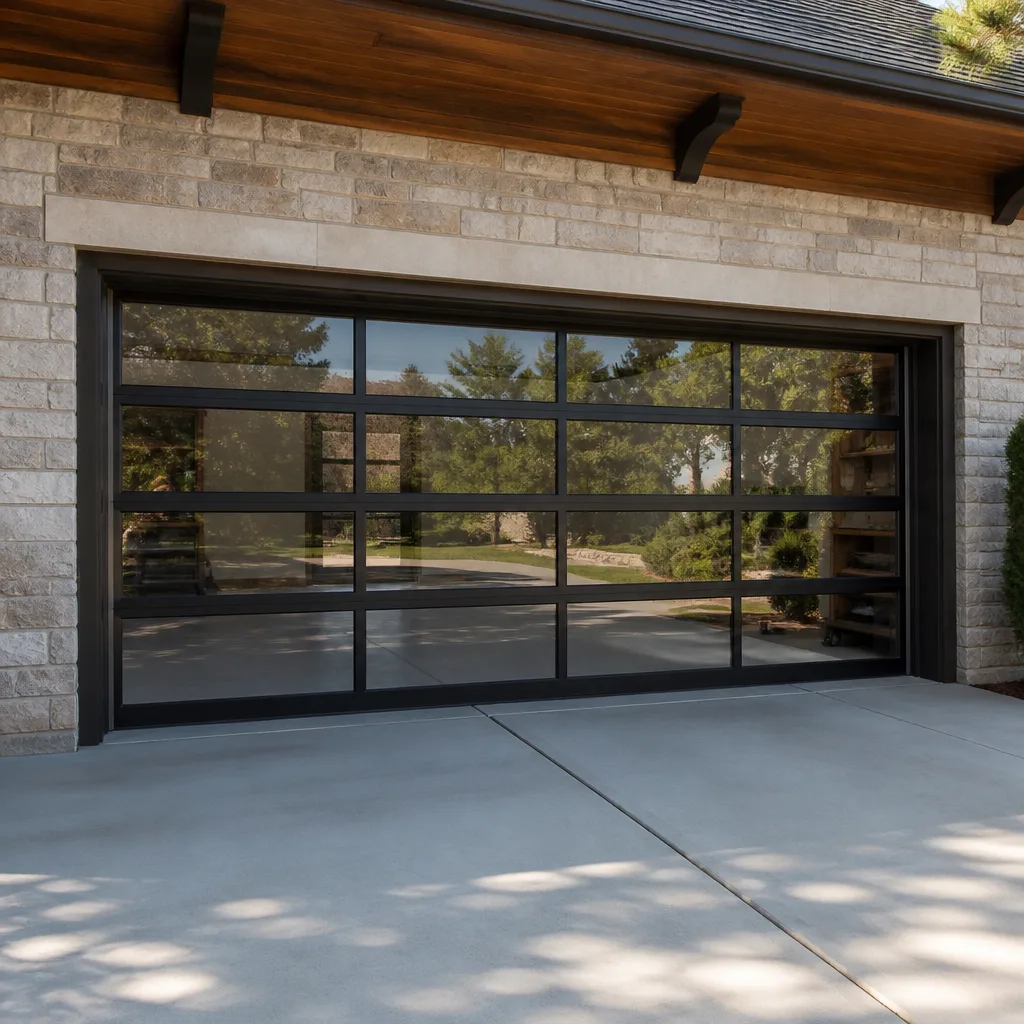 Full-view glass
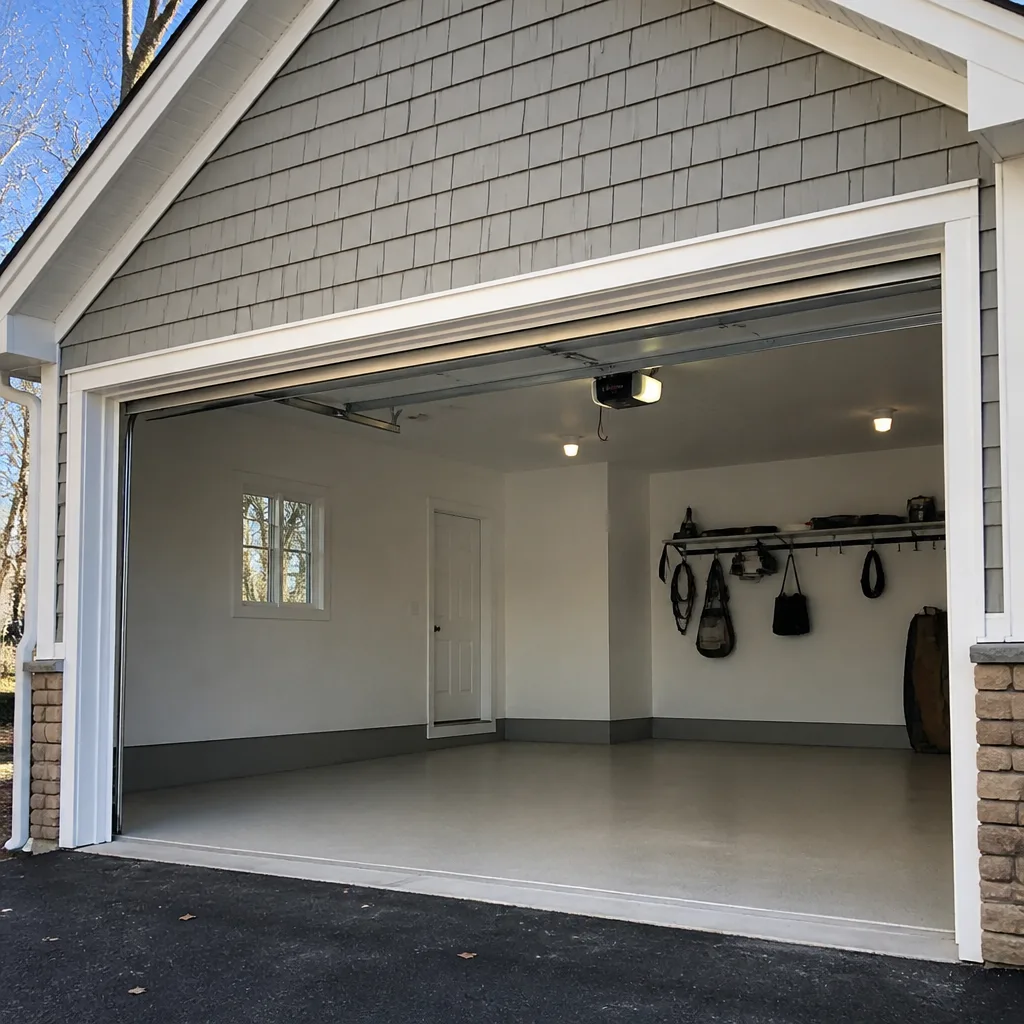 LiftMaster openers
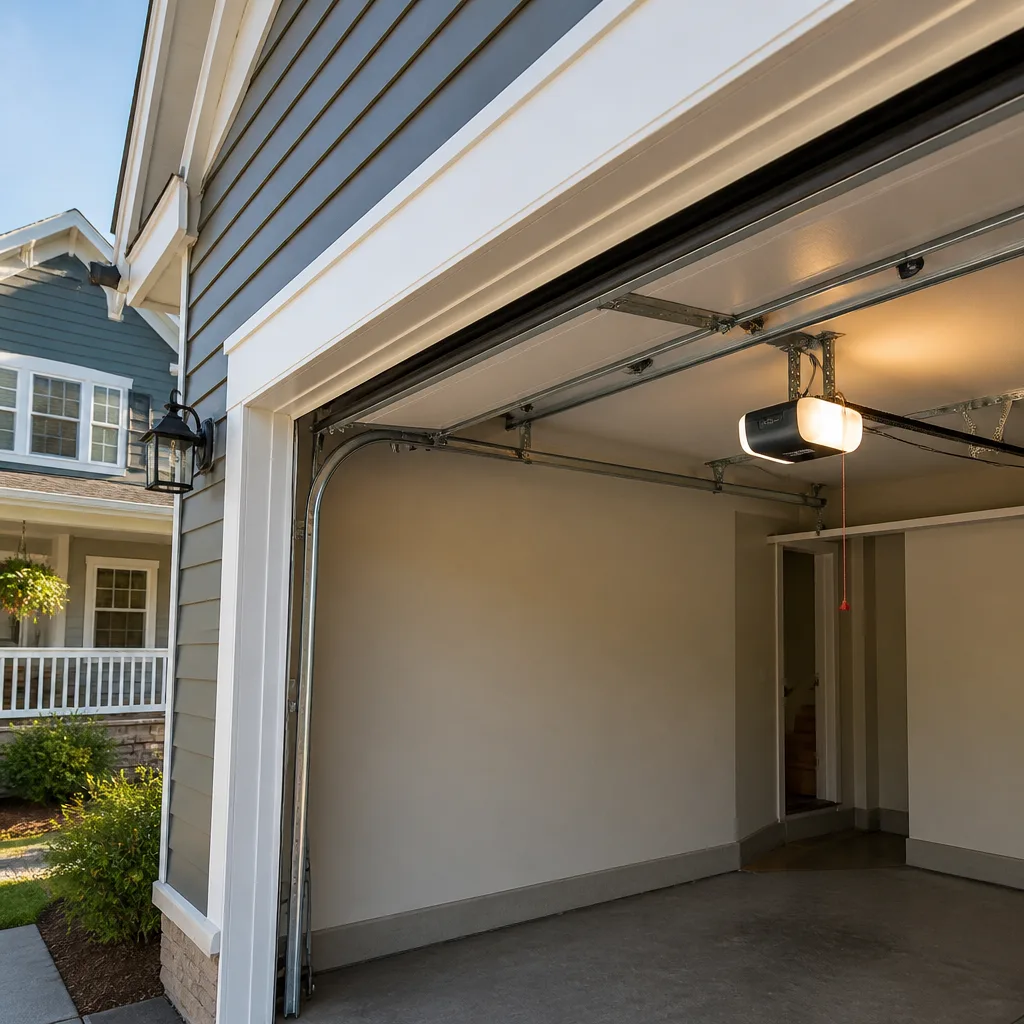 Chamberlain openers
Full 25-point door and opener safety check with every visit - springs, cables, rollers, tracks, and your LiftMaster or Chamberlain opener included
You get a price before we start. It does not change when the pro arrives.
Get your free estimateGarage Door Emergency Preparedness Guide for Norfolk Homes
Most garage door advice treats “emergency” as one thing. Here, it isn’t. In Norfolk, the failures that actually strand cars and leave homes open tend to arrive with the weather – a named storm, a days-long power outage, wind that throws a door off its track. And the piece homeowners most often overlook isn’t the door at all. It’s the release cord they’ve never once pulled. This guide walks through what to test before storm season, how to open a heavy two-car door by hand when the power is gone, which reinforcement choices make sense for Norfolk homes, what to check before you re-energize anything after a blow, and how to describe a failure to a technician so help arrives with the right parts. Read it now, while the weather is calm. Nothing here requires special tools, and an hour of prep can save a very long night.
Quick Answer
Emergency garage door preparedness in Norfolk means testing your manual release now, knowing how to lift and secure a heavy door by hand during a storm-related outage, reinforcing weak points before a named storm, and checking for track and panel damage before you restore power after high winds. The two failures that cause the most trouble here are seized release cords and doors knocked off track by wind pressure – both are preventable with a bit of planning. Everything below is written for this climate and this housing stock.
Styles & brands we work with
- Raised-panel steel
- Carriage house
- Modern flush
- Full-view glass
- LiftMaster openers
- Chamberlain openers
Table of Contents
- Why Norfolk Emergency Preparedness Looks Different
- The Emergency Release Cord: Test It Before You Need It
- Opening a Heavy Two-Car Door by Hand During an Outage
- Pre-Storm Reinforcement for Norfolk Homes
- Post-Storm Damage Assessment: What to Check First
- Your Opener Brand Matters in an Emergency
- Calling for Help: How to Describe the Failure
- The Year-Round Habit That Prevents Emergencies
Why Norfolk Emergency Preparedness Looks Different
Garage door failures look different in Norfolk than they do in an inland city. The dominant emergency isn’t a snapped spring in fair weather – it’s a cluster of failures that arrive together when a storm does. Power goes out for days. Wind pressure pushes against a wide door and stresses the track and hinges. Water driven under the door warps bottom seals and rusts the hardware that holds the panels together. The setup of the housing stock matters too. A lot of Norfolk garages sit on older lots close to mature trees, and a limb down on the door or the opener rail is a common start to a storm-week call. Beyond the storm itself, the region’s low-lying ground and drainage mean that a heavy rain event can put water where you don’t expect it, and a garage door that won’t close properly leaves everything behind it exposed.
What all of this adds up to is a simple idea: preparedness here is about planning for weather-driven failure, not for the rare mechanical fault. That shift changes what you test and what you reinforce. A homeowner in an inland city can reasonably wait for a problem. A Norfolk homeowner benefits from checking the things that fail under wind and water load before the season arrives.
We’ve walked through enough post-storm assessments to know the pattern. The doors that come through a blow intact are the ones where someone took twenty minutes in the spring to test the release, look at the tracks, and tighten the hardware. The doors that don’t are the ones nobody touched. If you take one thing from this section, make it that: in Norfolk, a little preparation goes further than a fast repair.
The Emergency Release Cord: Test It Before You Need It
The emergency release cord is the single most important safety device on your whole system, and it’s the one most homeowners have never touched. It hangs from the trolley that runs along the opener rail. Pulling it disconnects the door from the opener so you can move the door by hand. If it works, an outage is an inconvenience. If it’s seized, an outage is a problem – and in Norfolk’s humidity, a cord and trolley that never get exercised can bind up quietly over a season.
Testing it takes about a minute and needs no tools:
- With the door fully closed, pull the release cord down and toward the door. You should feel a firm click and the door should now move freely by hand.
- Lift the door a few inches, then lower it back down. If it moves without resistance from the opener, the release is working.
- Re-engage the door by running the opener. The trolley should reconnect on the next cycle.
- Do this every few months, and always before a named storm is forecast.
What does a failed or seized release look like before you need it? The cord feels stiff or won’t pull at all. The door doesn’t move by hand after you pull it. The cord hangs crooked, or the trolley looks corroded where it slides. Any of those signs is worth a call before storm season, because fixing a binding release is far easier in calm weather than during an outage. A seized trolley often means a hardware or opener service issue, and that’s a job for a trained technician, not a pry bar.
One safety point we make on every spring-related call: high-tension springs and the cables that run with them are the most dangerous part of the whole system. Never reach into the spring area or try to force a stuck release mechanism with the door up. If your release won’t move and the door is stuck open, secure the opening and call for help.
Opening a Heavy Two-Car Door by Hand During an Outage
A single-car door is manageable by hand. A heavy insulated two-car door is a different job, and during an extended outage you’ll want a clear protocol rather than a guess. The door is balanced by its springs, so it should lift with steady effort – but the heavier the door, the more care it takes, and the more it matters that you don’t force anything.
Here’s how to handle it safely:
- Confirm the door is disconnected. Pull the release cord and check that the door moves freely before you lift.
- Lift with your legs, from the bottom panel, using the lift handle. Take it up slowly and let the springs do their share of the work. If the door feels excessively heavy, stop – that usually signals a spring or balance problem that should be repaired, not forced.
- Engage the locking bar or door lock once the door is open, so it can’t come down on its own. On a two-car door, this is not optional.
- Secure it temporarily during an extended outage by leaving the door in the closed, locked position unless you need vehicle access – then open, use, and re-secure each time.
Manual operation is a stopgap, not a plan. The goal during an outage is to secure the home and keep vehicle access workable, not to run the door up and down repeatedly. Every manual cycle on a heavy door adds wear. If the outage looks long, that’s a good time to think about what it’ll take to get the opener back online the day power returns – and to call for a professional assessment if anything felt wrong while you were lifting by hand.
We keep this protocol in mind on every garage door repair visit, because a balanced door is what makes manual operation possible in the first place. If your door is fighting you by hand, it’s telling you something needs attention.
Pre-Storm Reinforcement for Norfolk Homes
When a named storm is on the forecast track, there’s a short window to reinforce a garage door that takes wind load. A wide, lightweight door is one of the most vulnerable openings on a house in high wind, and it’s worth thinking about before the storm, not during it. Here’s what actually makes a difference for Norfolk homes.
- Horizontal bracing kits. These add strength across the door’s width, helping it resist wind pressure that would otherwise bow panels or flex the track. They’re the most common reinforcement choice for homes in a wind zone.
- Door lock bars. A lock bar secures the door against the frame, keeping it from being pushed inward by wind. On a two-car door especially, this is a meaningful hold against wind load.
- Disconnect the opener before a named storm. If you’re bracing and locking the door, take the opener out of the equation so it isn’t fighting the reinforcement. Disconnect at the release cord and follow the manual operation protocol above.
Bracing kits and lock bars need to be matched to your door’s panel type and weight, so it’s worth a professional look rather than a guess from a hardware aisle. The goal is reinforcement that supports the door, not hardware that stresses it. If you’re unsure what your door can take, we can assess it and tell you plainly. The same goes for garage door installation – if your current door is old, light, and vulnerable, a reinforced model may be the smarter long-term answer for a Norfolk home.
One honest note: reinforcement helps, but it’s not a guarantee against every storm. The bigger win is making sure the door is in good working order and the release, tracks, and locks are all functioning before the wind arrives. Prep is cheap. Repair after a blow is not.
Post-Storm Damage Assessment: What to Check First
When the wind drops and the power is back, resist the urge to hit the opener button and walk away. A door that came through a storm needs a look before you run it under power. This is the sequence we recommend, in order.
- Look at the door from outside before you touch it. Check for panels out of line, sagging, or gaps that weren’t there before.
- Inspect the tracks by eye. Look for bends, separation from the frame, or debris caught in the channel.
- Check the bottom seal and hardware. Wind pressure can blow out a bottom seal, and driven water can rust hinges and rollers.
- Test the release and move the door by hand. If it moves smoothly and re-engages cleanly, it’s likely safe to power it. If it binds, stop.
- Only then restore power and run one full open-and-close cycle while you watch it.
If the door is off its track, bound up, or won’t seat properly, don’t force it. A bent track or a door that’s slipped is a job for a trained technician – the springs and cables are under load, and working around them by hand is where people get hurt. The same goes for an opener that hums without moving or trips a breaker after a storm; that’s an electrical fault and it needs a proper diagnosis.
One Norfolk-specific point: after a heavy-rain event, check for standing water or dampness in the garage and around the door’s base. Water sitting against the bottom seal and the floor hardware is what leads to rust and warping down the line. Dry it out and address the drainage if the same spot keeps flooding. If you get through the assessment and something feels off, that’s exactly when to call for a specialist eye rather than run a door that might be damaged.
Your Opener Brand Matters in an Emergency
The brand on your opener is not a detail – it’s part of why an emergency call can be resolved on the first visit. Different openers have different release mechanisms, different safety reversal behavior, and different smart-home and Wi-Fi features. A technician who works across the major platforms can diagnose the fault faster and bring the parts that fit. We service equipment from the industry’s most widely installed brands, including LiftMaster, Chamberlain, Genie, Craftsman, Clopay, Amarr, Wayne Dalton, and Raynor – so whether your opener is a LiftMaster or a Genie, we know the system.
Why this matters in a storm context: an opener that’s lost power and come back can behave strangely – limits drift, safety eyes fault out, Wi-Fi modules drop off. On today’s smart-connected openers, a remote diagnosis depends on knowing the platform. A Chamberlain or LiftMaster unit that’s re-connected to your app will show different symptoms than a legacy Craftsman motor. Knowing which one you have, and where its model label sits on the motor head, saves the technician a trip and you a wait.
Take a photo of the model and serial label on the opener motor now, before you need it, and keep it on your phone. If you ever have to call in an emergency, that photo plus the brand name gets you the right parts on the first dispatch. If you’d rather not sort through it yourself, our garage door opener repair team does the identification and diagnosis for you. It’s the kind of small prep step that pays off the moment the power comes back.
Calling for Help: How to Describe the Failure
When your door won’t move and the weather is still bad, the quality of your call determines how fast the right fix arrives. The clearer you can describe what’s happening, the more likely the technician shows up with the right parts on the first dispatch. You don’t need technical vocabulary – just a few facts in order.
- What the door is doing: stuck open, stuck closed, halfway, binding, or making a new noise.
- What it was doing before: did it stop after the power went out, after a gust, or on its own?
- The opener’s brand and model, from the label photo you took (see above). LiftMaster, Chamberlain, Genie, Craftsman, Raynor – the name narrows it fast.
- Anything you’ve noticed on the tracks or panels: a bend, a gap, a rubbed mark, a dropped limb.
- Whether the door is currently secure: is it locked, is the opening blocked, is anything exposed to the weather?
That last point matters more than people think. If the door is stuck open during a storm, the priority is securing the opening, because an unsecured garage door is a security risk and an easy entry point. Tell us the door is open and we’ll prioritize accordingly.
This is where our five-service focus helps: everything we do is a garage door job – repair, opener repair, installation, spring repair, and emergency service – so the person taking your call knows the equipment, not a general handyman’s checklist. Reach us at (844) 443-3797. We answer 24/7. Fast dispatch from 7am to 7pm, Sunday through Friday. When you call, you’ll get an estimate in writing before any work starts, and that written estimate is the price – no surprises when the job is done.
The Year-Round Habit That Prevents Emergencies
Most garage door emergencies in Norfolk are not really emergencies – they’re the end of a slow decline that nobody caught. A rusted hinge, a track that’s loosened, a release cord that hasn’t been pulled in a year: each is small on its own. Together they’re what turns a manageable situation into a call on the worst possible day.
A simple seasonal walkthrough prevents most of it:
- Test the release cord every few months and before any named storm, per the steps above.
- Look at the tracks and hardware for bends, loose bolts, and rust. Tighten what’s loose and flag what looks worn.
- Check the bottom seal for cracks and gaps, especially ahead of a rainy season.
- Keep the opener’s label photo and manual where you can find them fast.
- List a garage door specialist’s number next to your utility and insurance contacts, so it’s a single glance away in a storm.
Our technicians have up to 14 years of experience, and they’ve seen what a season of Norfolk weather does to a door that gets no attention. The pattern is consistent: the doors that fail during a storm are the ones that were already complaining. Every job we do is a garage door job, and that single-trade focus means we catch the small issues before they become the call you make in the dark.
Common Mistakes to Avoid
- Never testing the release cord until the power is out. In Norfolk’s humidity, a cord that’s never been exercised can bind at the worst moment. Pull it during calm weather, not during a storm.
- Forcing a heavy door by hand when it fights back. A door that feels excessively heavy during manual operation is signaling a spring or balance issue. Keep lifting and you risk injury and further damage.
- Running the opener immediately after a wind event without checking the tracks. A door that’s slightly off track can tear itself up under power. Look first, then power it.
- Trying to fix a stuck door near the springs or cables. The high-tension springs and cables are under load and are the most dangerous part of the system. This is work for a trained specialist.
- Leaving a door stuck open during a storm. A garage door that won’t close is a security risk. Secure the opening and call for help rather than leaving it exposed.
- Skipping the label photo. Without the opener’s brand and model, an emergency call takes longer to resolve because the right parts aren’t confirmed until the technician arrives.
- Using a general handyman for a garage door emergency. General contractors and most handymen won’t handle the high-stakes, security-critical garage door failures. Use a specialist who works on doors, springs, and openers exclusively.
See the difference
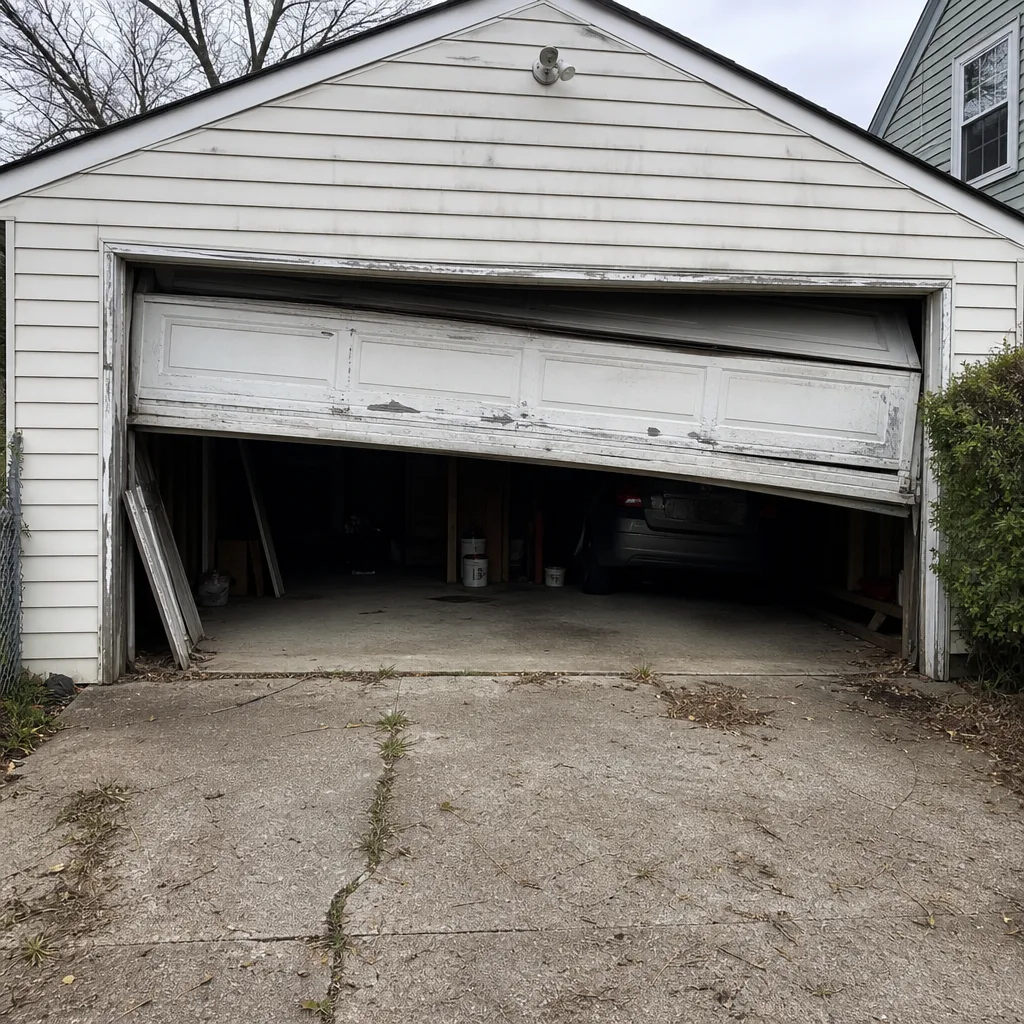 Before
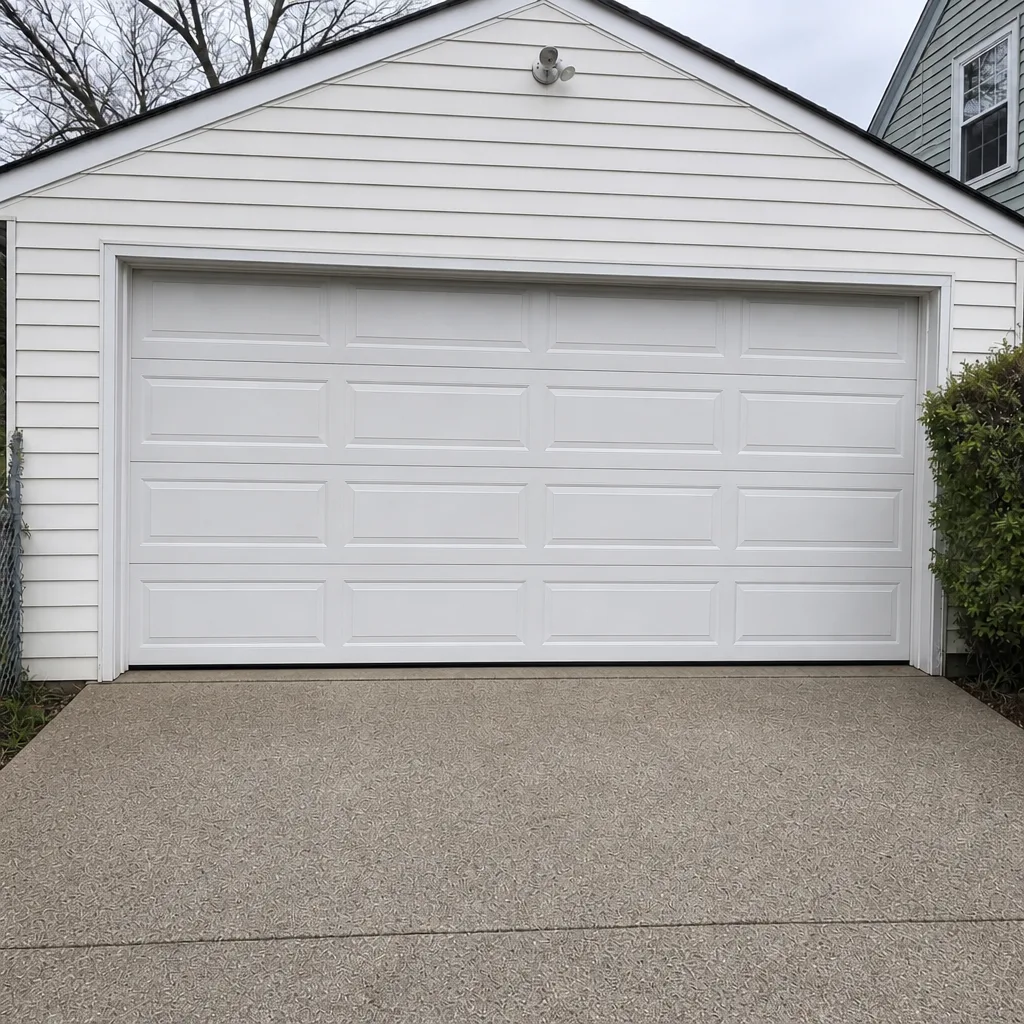 After
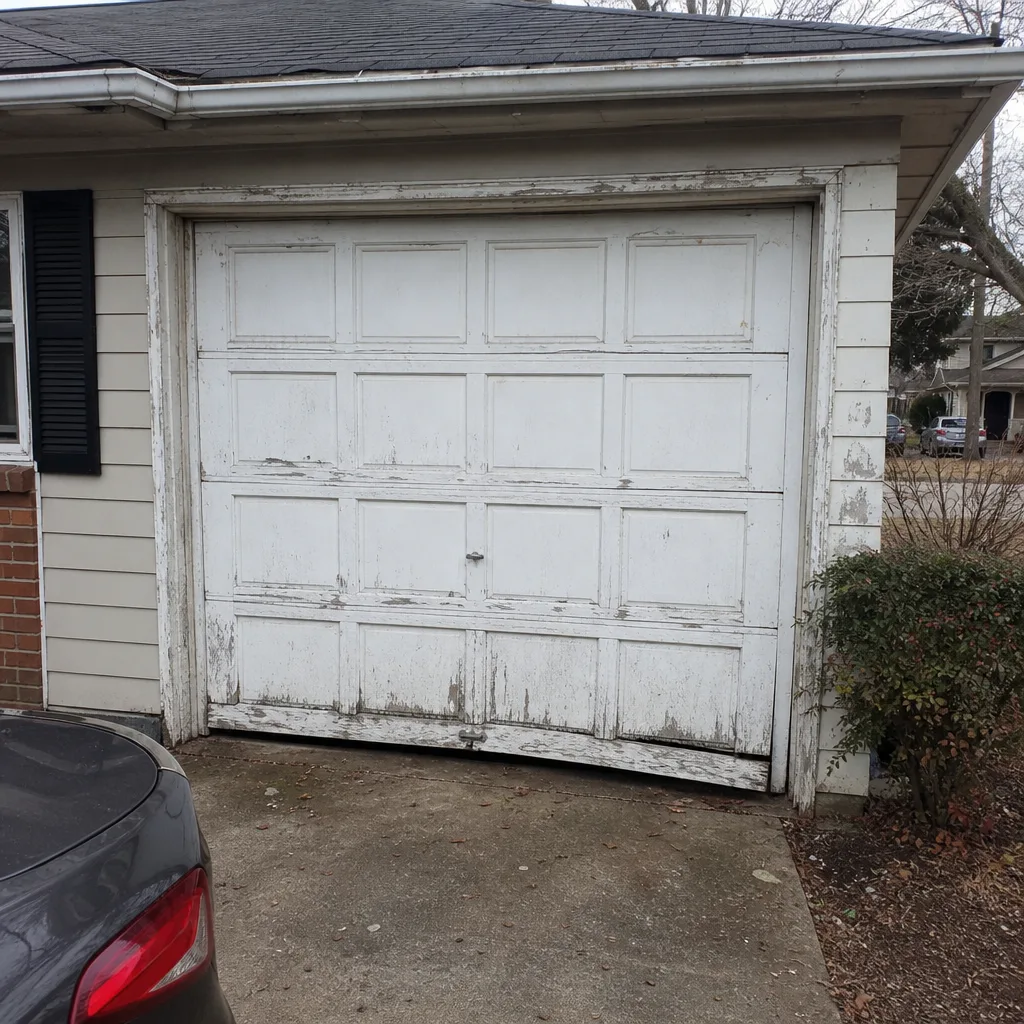 Before
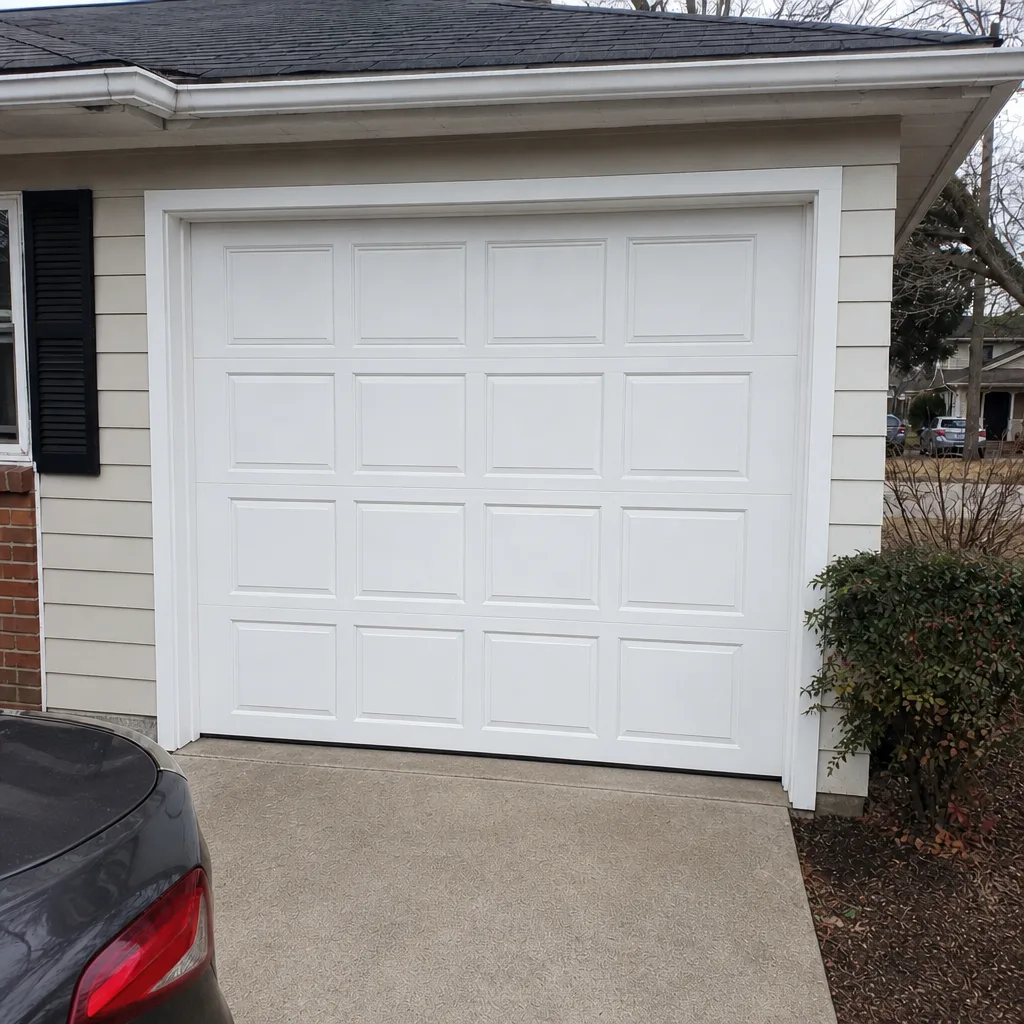 After
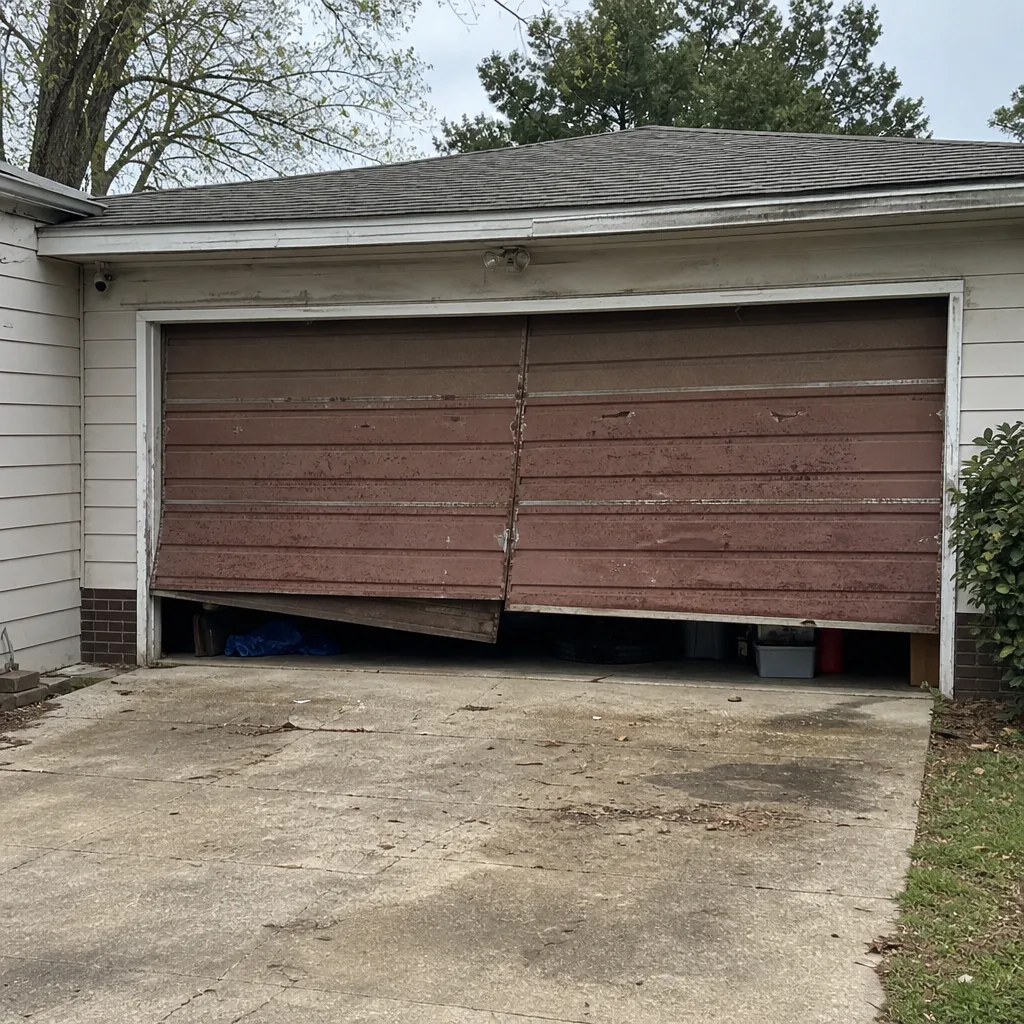 Before
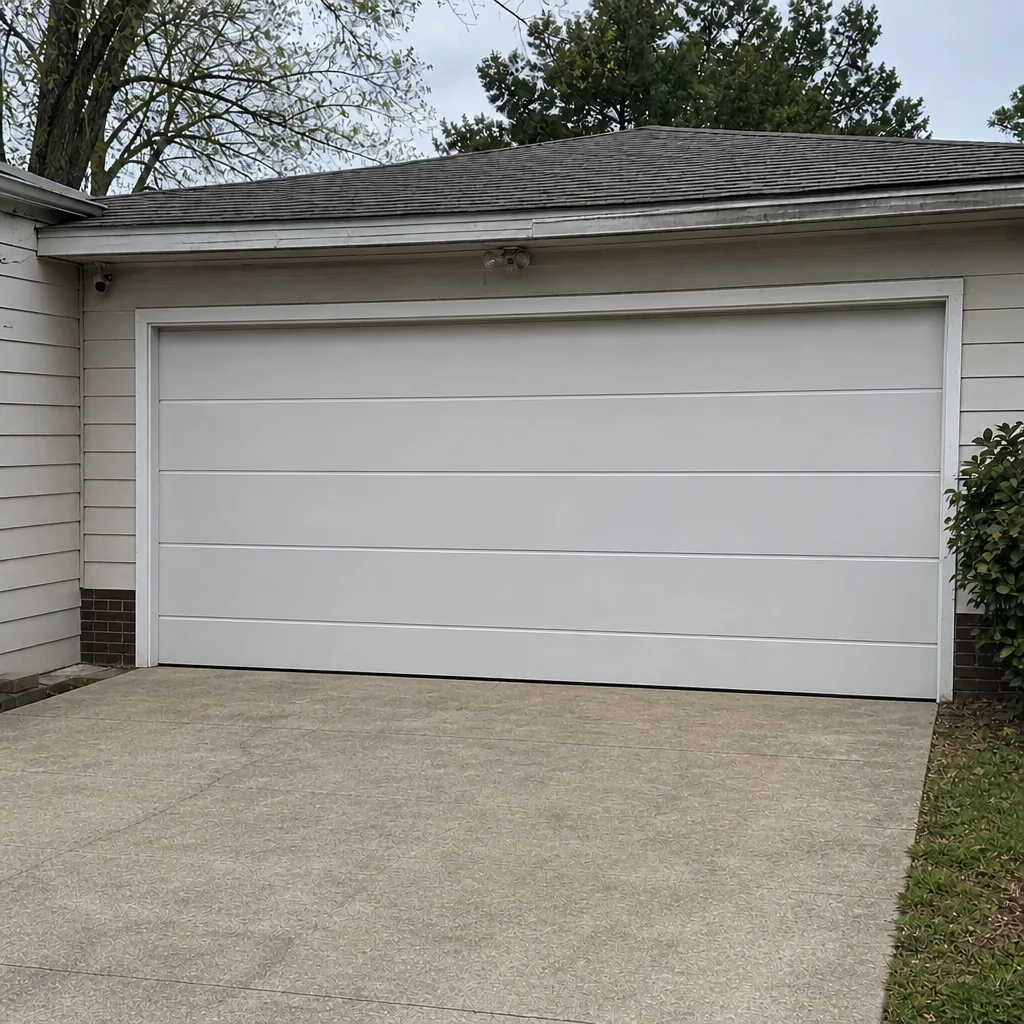 After
When to Call a Professional
Call a specialist when the door is off its track, when a spring is the suspected cause, when the release cord won’t move and the door is stuck, or when the opener hums, trips a breaker, or won’t reconnect after an outage. Call immediately if the door is stuck open during bad weather and the opening is unsecured – that’s a security problem first and a repair second. And call any time you’re unsure, because a quick assessment is always cheaper than the damage from forcing a stuck mechanism. Some jobs are simply not DIY territory: high-tension springs and cables, electrical faults in the opener, and anything that involves the door coming down unexpectedly. If you can’t safely get the door to a stable, locked position, stop and get help.
Norfolk Garage Door Repair Experts offers free estimates in Norfolk – call (844) 443-3797. We answer 24/7. Fast dispatch from 7am to 7pm, Sunday through Friday.
Frequently Asked Questions
Pull the emergency release cord to disconnect the door from the opener, lift the door from the bottom using the lift handle and your legs, and then secure it with the lock bar or a temporary lock so it can’t come down on its own. On a heavy two-car door, take it slowly and let the springs do their share – if it feels excessively heavy, stop and call for help, because that usually signals a spring or balance problem. Call (844) 443-3797 for an exact quote on any repair – estimates are free.
Emergency garage door repair in Norfolk is quoted per job – the technician assesses the failure in person and gives you a written estimate before any work starts. That written estimate sets the final price; there’s no separate emergency surcharge baked into it. The biggest cost variables are whether a spring, track section, or opener part needs replacing, so the exact situation is what determines the number. Call (844) 443-3797 for an exact quote – estimates are free.
We aim for same-day service on emergency garage door failures, and same-day dispatch is available during our dispatch hours. We answer 24/7. A call outside dispatch hours is booked into the next opening, Sunday through Friday, 7am to 7pm. Call (844) 443-3797 and describe what the door is doing so we arrive with the right parts.
No. The price is quoted and agreed before any work starts, and the written estimate is the final price. If the technician finds something additional during the assessment, they’ll tell you and re-quote before doing any extra work – you’re never handed a bill that’s bigger than the number you agreed to. Call (844) 443-3797 for an exact quote – estimates are free.
The local pro who arrives is licensed and insured as the state requires, and trained specifically on garage door systems – not a general handyman with a side service. We service equipment from the industry’s major brands, including LiftMaster, Chamberlain, Genie, Craftsman, Clopay, Amarr, Wayne Dalton, and Raynor, so the technician knows your system before they arrive. Call (844) 443-3797 to talk through your situation.
Look at the door and tracks from outside before you power anything up. Check for panels out of line, bends or separation in the tracks, blown-out bottom seals, and rusted hardware. Test the release cord and move the door by hand; if it binds or won’t re-engage, don’t force it – call for a specialist. If everything moves smoothly, restore power and run one full cycle while you watch it.
The Bottom Line
Preparedness for a Norfolk garage door emergency is mostly a matter of things you do before the storm, not after. Test the release cord and learn to move the door by hand. Brace and lock the door ahead of a named storm and disconnect the opener. Know the post-storm check sequence so you don’t run a damaged door under power. Keep your opener’s label photo on hand so an emergency call gets the right parts the first time. And when something is off track, spring-related, or genuinely stuck, call a specialist who works on garage doors exclusively rather than a generalist. The calm-season hour you spend now is the one that keeps a storm from turning into a security problem.
Whether you’re bracing for the season or dealing with a door that’s already failed, we can help. Call Norfolk Garage Door Repair Experts at (844) 443-3797 for a free estimate. We answer 24/7. Fast dispatch from 7am to 7pm, Sunday through Friday. From Norfolk Garage Door Repair Experts, every job is a garage door job – repair, opener work, spring service, installation, or emergency response – and the written estimate always comes before the work starts.
Written by the team at Norfolk Garage Door Repair Experts.