
Last updated November 21, 2026
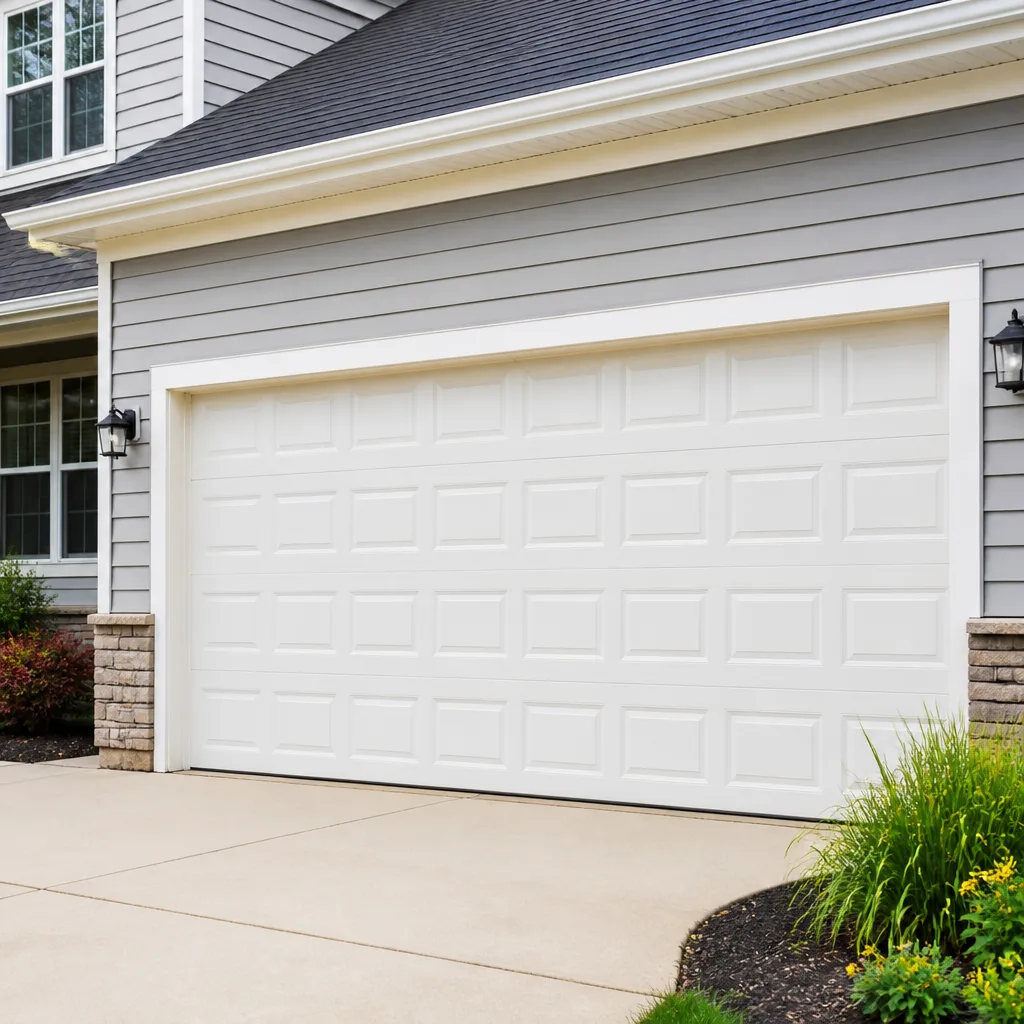 Raised-panel steel
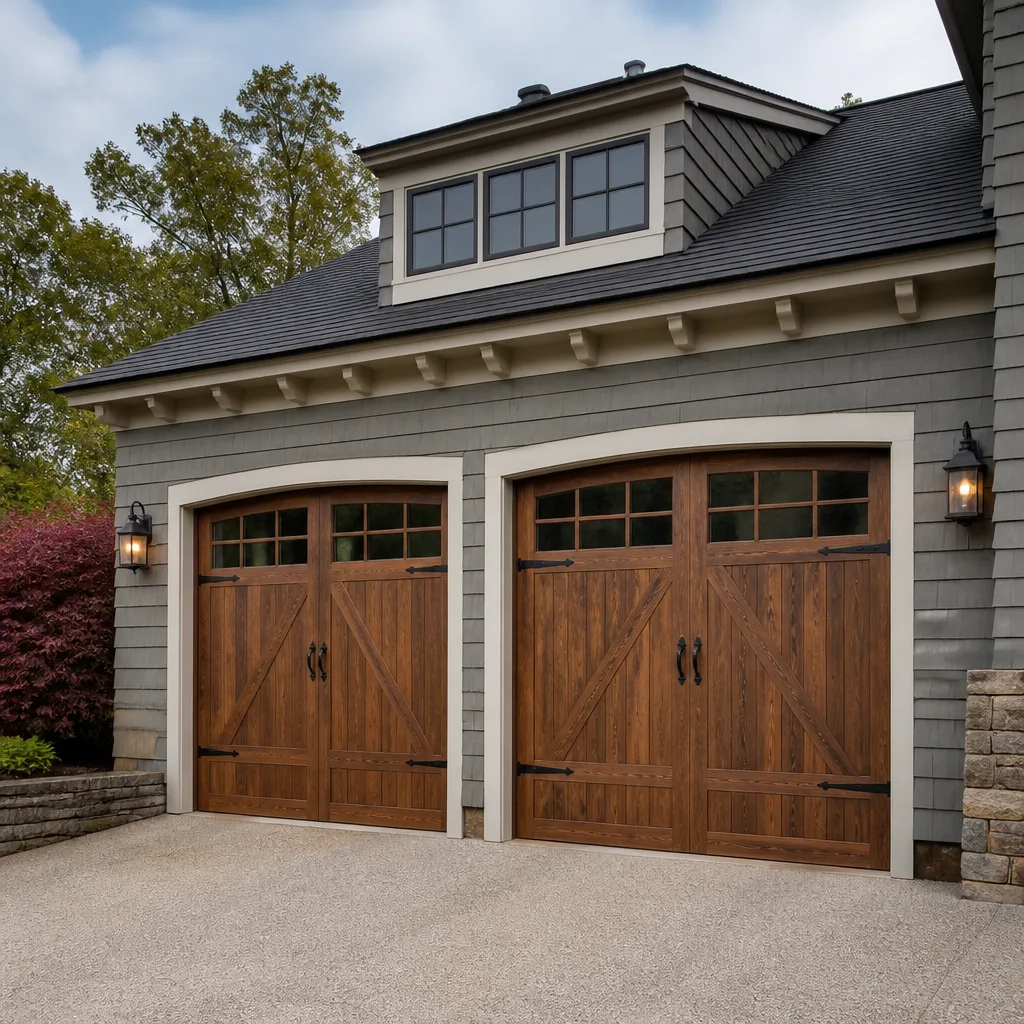 Carriage house
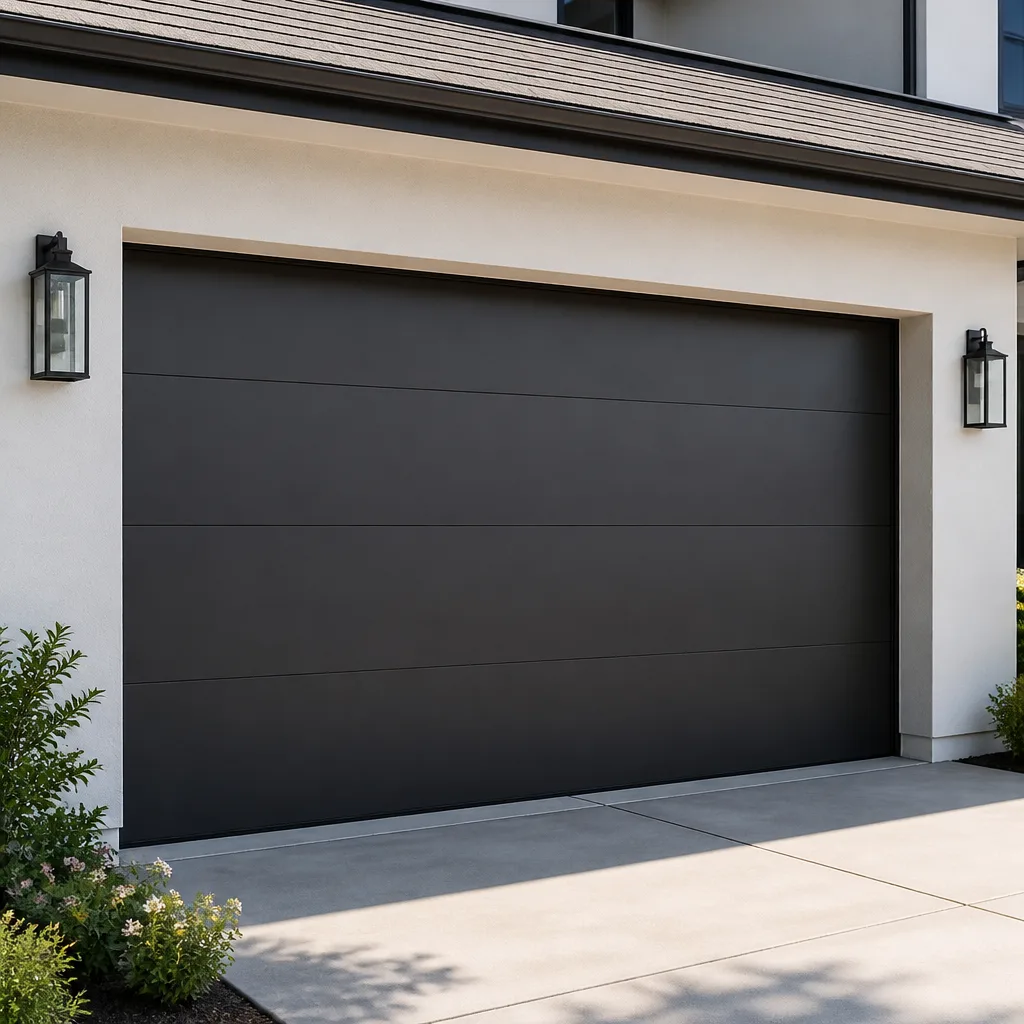 Modern flush
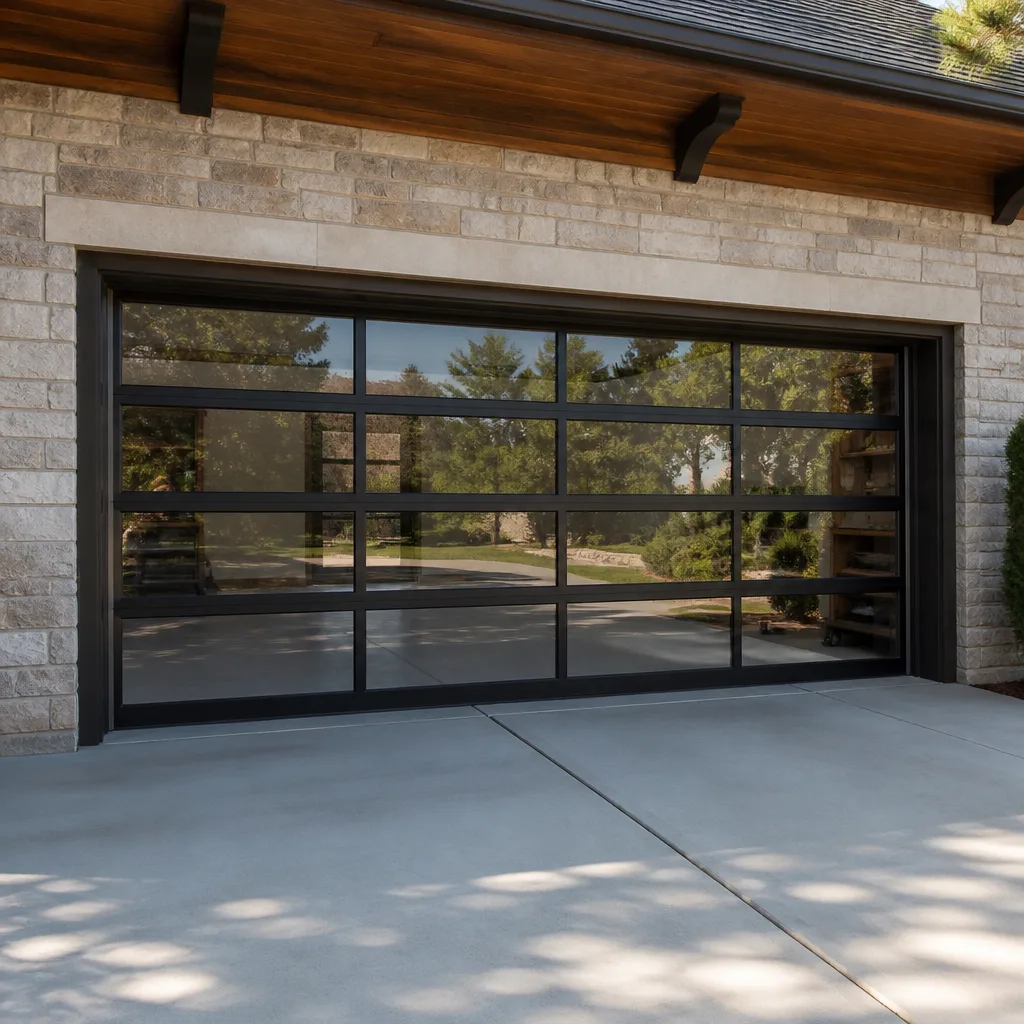 Full-view glass
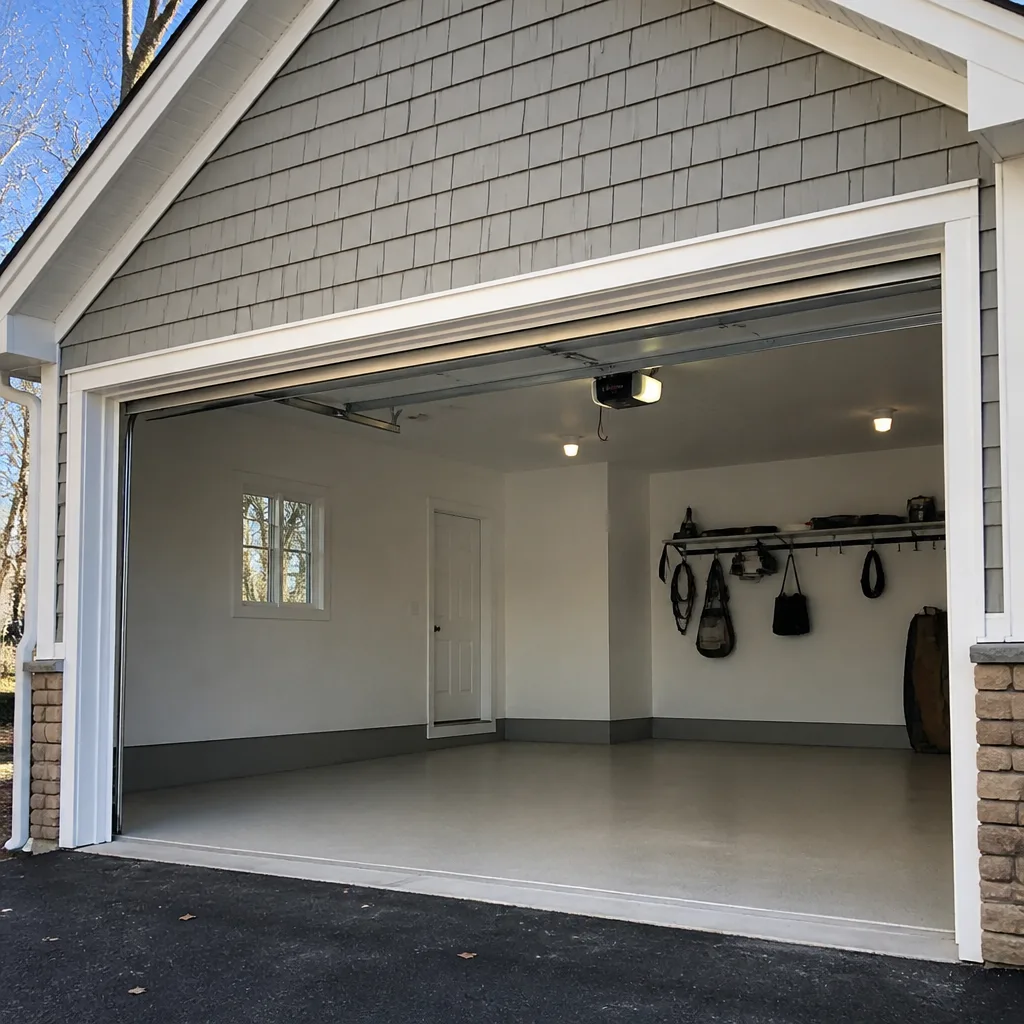 LiftMaster openers
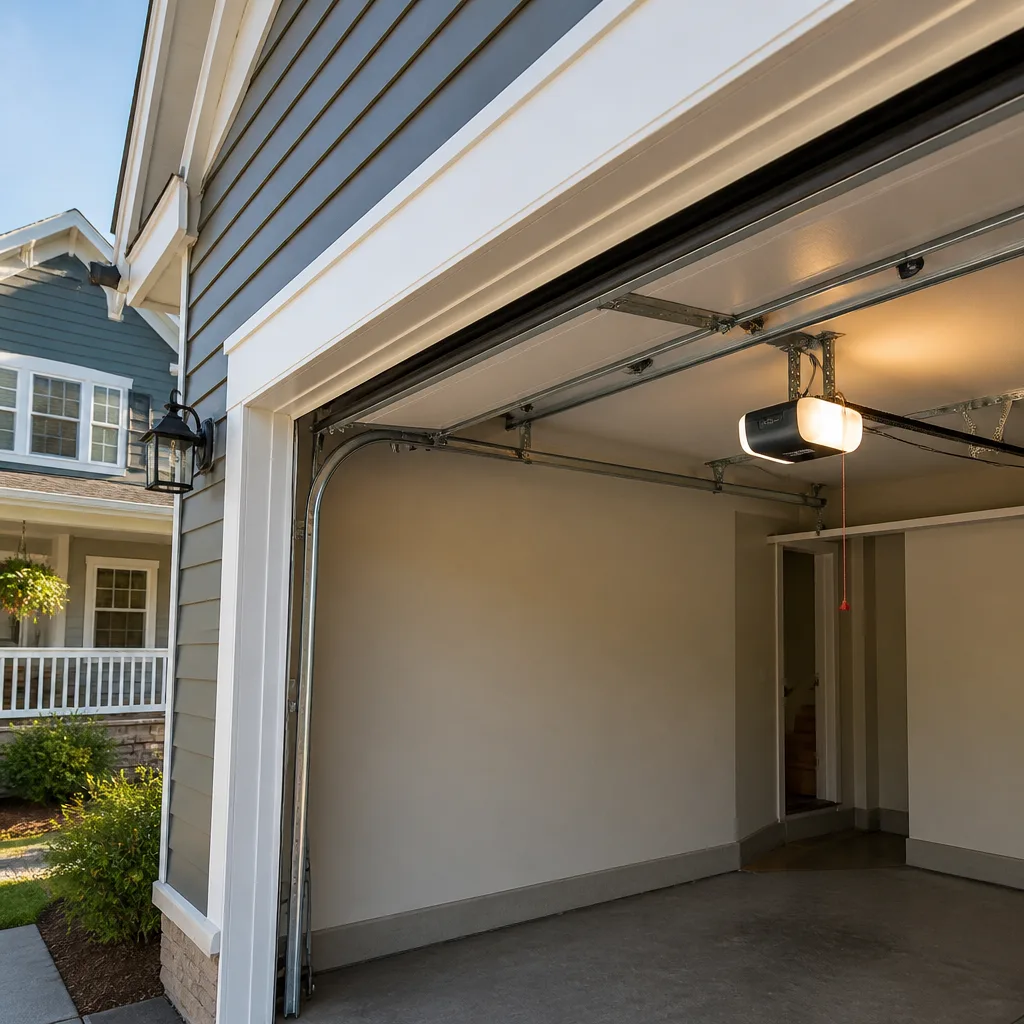 Chamberlain openers
Full 25-point door and opener safety check with every visit - springs, cables, rollers, tracks, and your LiftMaster or Chamberlain opener included
You get a price before we start. It does not change when the pro arrives.
Get your free estimateDIY vs Professional Garage Door: The Norfolk Homeowner’s Decision Guide
Most garage door advice online splits the difference: “some jobs are DIY, some aren’t, use your judgment.” That answer is wrong because it treats every garage door task as though it carries the same risk. It doesn’t. A torsion spring under tension stores enough energy to break a bone or worse, and no amount of YouTube confidence changes that. Remote programming takes four minutes and a good set of instructions. Everything else falls somewhere between, and the line is drawn by physics, not preference. In this guide we’ll show you exactly where that line sits for a Norfolk homeowner, which tasks you can safely handle, which you can’t, and what a DIY mistake actually costs. Norfolk appears throughout because local storm patterns and housing stock shape the answer.
Quick Answer
Spring work, cable work, and anything involving the opener’s high-voltage wiring are never safe for a homeowner to attempt regardless of skill level, because these components store lethal mechanical or electrical energy. Weatherstripping, bottom seals, hinge tightening, safety sensor alignment, and remote or app programming are genuinely DIY-appropriate with basic tools. Everything else – track realignment, panel replacement, opener motor swaps – depends on what’s actually broken, and a professional diagnosis is the cheaper move before you touch anything.
Styles & brands we work with
- Raised-panel steel
- Carriage house
- Modern flush
- Full-view glass
- LiftMaster openers
- Chamberlain openers
Table of Contents
- The Energy Framework: Why Garage Doors Are Different From Other Home Repairs
- What You Should Never Do Yourself
- DIY-Appropriate Tasks and the Tools You’ll Need
- How DIY Work Affects Your Manufacturer Warranty
- The Cost of DIY Mistakes
- When a “Simple” Dent Is Actually Structural
- Norfolk-Specific Considerations
- The Decision Checklist: Step by Step
The Energy Framework: Why Garage Doors Are Different From Other Home Repairs
A torsion spring stores between 100 and 300 foot-pounds of torque while under tension. That’s roughly the energy of a mid-sized compound bow at full draw, except a wound torsion spring releases in about 15 milliseconds if a winding bar slips. That single fact is why garage door repair doesn’t follow the same DIY rules as, say, replacing a toilet flapper or patching drywall. The question isn’t whether you’re handy. It’s whether the component you’re touching stores energy that can hurt you when something goes wrong.
We think about this in four categories:
- Mechanical stored energy. Torsion springs, extension springs, and the cables that connect them to the door. These are under constant load, and releasing that load correctly requires training, the right winding bars, and a clear understanding of how the drum and cable system interacts.
- Electrical stored energy. Capacitors in the opener motor, the 120-volt supply line running into the opener head, and any hardwired wall control. A capacitor can hold a charge after the breaker is off.
- Gravity-loaded mass. A nine-foot-wide insulated door can weigh over 200 pounds. When a spring breaks, that weight is unsupported, and any track or hinge work done while the door is up is work done under a suspended load.
- Zero-risk components. Seals, weatherstripping, hinges, rollers under no tension, remotes, and sensors. These don’t store energy and can be serviced safely by anyone who can hold a screwdriver.
Once you separate the components this way, the DIY question answers itself. Anything in the first three categories belongs to a trained specialist. Anything in the fourth is yours to handle. In our experience, most garage door injuries happen when a homeowner treats a category-one task as though it belonged to category four – usually a spring that “looked fine” right up until it didn’t.
What You Should Never Do Yourself
These tasks are non-negotiable. Regardless of how many videos you’ve watched or how confident you feel, the risk of serious injury and the cost of a botched repair both point the same direction.
Torsion and extension spring replacement
High-tension springs are the most dangerous part of any garage door system. Torsion springs sit directly above the door on a steel shaft, wound to a specific number of turns that counterbalances the door’s exact weight. Extension springs run alongside the tracks, also under load. Both release stored kinetic energy instantly if a winding bar, vice grip, or improvised tool slips. We’ve handled every spring failure you can imagine, and the ones that worry us most are the ones a homeowner started and stopped halfway. A door left with a partially wound spring is more dangerous than a door with a broken one, because nothing looks wrong until it is.
Track realignment after impact
Track work sounds simple – you bend the rail back into shape, tighten a bracket, done. But when a door has been hit or has jumped a track, the panel edges and hinges are often bent in ways you can’t see while the door is up. Attempting a realignment with the door in the raised position means working under several hundred pounds of unsupported weight. If the door drops, the door wins. This is one of the situations where you should call a professional to handle the repair before you touch a bolt.
Opener electrical work
Swapping a light bulb or plugging in a new opener head to an existing outlet is fine. Working inside the opener housing – replacing a capacitor, swapping a logic board, chasing a short in the low-voltage wire – is not. Low-voltage doesn’t mean low-risk when it sits next to a 120-volt line. The opener also needs to be re-tuned afterward with the correct force and travel limits, or it will either refuse to close or close with enough force to hurt someone. If you’re diagnosing anything beyond a dead remote battery, opener repair is the faster and safer path.
Cable replacement
Cables are under the same tension as the springs they connect to. A drum can free-spool and a cable can snap without warning during handling. We don’t recommend any homeowner handle garage door cables, even on a door that’s already broken.
DIY-Appropriate Tasks and the Tools You’ll Need
The good news is that several common garage door problems really are DIY-appropriate. If your door opens and closes fine but something is noisy, drafty, or not responding to the remote, you can usually fix it yourself with a Saturday morning and a small tool bag.
Tasks worth handling yourself
- Weatherstripping replacement (the frame seal around the opening). Pull the old strip out of the retainer and slide in new vinyl or rubber strip. No load, no risk.
- Bottom seal (the astragal at the bottom of the door). Slide the old seal out of the aluminum retainer and feed the new one in. A soapy water solution helps it slide.
- Hinge tightening. Hinges connect the panels and can loosen over years. A quarter-inch driver and five minutes will quiet most rattles.
- Safety sensor alignment. The two sensors near the floor on either side of the door need to see each other. A bumped broom handle knocks them out of alignment and the door refuses to close. Small flashlight, slight adjustment, done.
- Remote and keypad programming. Every brand we work with – LiftMaster, Chamberlain, Genie, Craftsman – has a documented pairing process for remotes, wall controls, and app-connected units. The manual or the manufacturer’s website has the exact button sequence.
- Light bulb replacement inside the opener head. Use the bulb the manufacturer specifies; higher wattage can damage the socket.
Tools you’ll actually need
A quarter-inch and three-eighths socket set, a Phillips and flathead screwdriver, a set of Allen wrenches, a step ladder tall enough to reach the opener, a small flashlight, and a tube of graphite or silicone spray for the hinges and rollers. That’s it. If a job needs a winding bar, a hammer drill, or a torque wrench, it isn’t on this list.
Tasks that sound easy but aren’t
Roller replacement is one of these. In theory you slide the old roller out of the hinge and slide a new one in. In practice, if the door is up, the roller brackets sit under load, and a door with a broken spring should never be up in the first place. Panel replacement falls in the same category. So does any track adjustment beyond a light knock with a rubber mallet – and even that only when the door is down and at rest.
How DIY Work Affects Your Manufacturer Warranty
If your door carries a manufacturer warranty from Clopay, Amarr, or another major brand, DIY spring work or an unauthorized opener repair can void the coverage for the affected component. This isn’t a scare tactic – it’s written into most manufacturer terms, and it’s the second reason the DIY decision isn’t purely about safety.
A manufacturer warranty on a garage door typically covers the panels, the hardware, and in some cases the finish, for a defined number of years. What it almost never covers is damage caused by improper installation or repair. If a homeowner over-winds a torsion spring and cracks a panel, or cross-threads a hinge and strips a mounting point, the manufacturer has a legitimate case that the failure wasn’t theirs. The same logic applies to openers. LiftMaster and Chamberlain both tie their warranties to installation by a qualified technician for certain components, and an improperly tuned opener that burns out a motor is usually not covered.
There’s a practical workaround for Norfolk homeowners: if you want the warranty to stay intact, keep the DIY list limited to the cosmetic and low-risk items above. Anything that touches the springs, cables, motor, or the door’s balance is best left to a trained specialist who can document the work. If you’re not sure whether a repair is warranty-relevant, ask before you start. That single question saves more homeowners than any tool.
The Cost of DIY Mistakes
The most expensive garage door repair is usually the one a homeowner started and didn’t finish. Here’s how the common DIY errors stack up, and why the math rarely works in your favor.
Over-wound spring
Winding a torsion spring to the wrong number of turns is the single most common spring mistake we see. Too few turns and the door won’t lift; too many and the spring is loaded beyond spec. An over-wound spring can fail catastrophically during the next cycle, and it can warp the door’s balance so badly that panels bend at the hinges. The correction involves replacing the spring and often the affected hardware – plus a full re-balance of the door. That’s a multi-part job that started as a one-part job.
Failed track realignment
Track that’s been forced back into position usually isn’t straight, and a door running on a bent track will eventually jump it again – often with more damage the second time. If a panel is warped, the track, the hinges, and often the sections themselves need to be replaced rather than straightened. A professional assessment up front usually costs less than the second failure.
Stripped trolley carriage
Adjusting the opener’s travel limits to compensate for a door that won’t close all the way will eventually strip the trolley carriage or burn out the motor. The opener is telling you something is wrong – a stiff hinge, a worn roller, a spring that’s losing tension – and overriding it just moves the failure downstream. A motor replacement is far more expensive than a hinge replacement.
The hidden cost
The other thing to weigh is time. A professional can usually diagnose and resolve most garage door problems in a single visit. A homeowner is often ordering parts, watching three videos with conflicting advice, and taking a second trip to the hardware store before giving up. When you add up the parts, the time, and the risk of a secondary failure, the professional estimate usually comes out ahead – even before you count the warranty.
When a “Simple” Dent Is Actually Structural
A dented panel looks like a cosmetic problem. Sometimes it is. But on a steel or aluminum sectional door, a dent is often the visible tip of a larger issue, and knowing the difference matters before you decide whether to call someone.
The panels on a garage door aren’t decorative. They carry the door’s structural load, and each panel’s hinges are engineered to flex within a specific range as the door moves through the curved track. A dent that distorts a hinge point will change how that panel articulates. Over time, the panel can crack at the hinge, and a cracked panel can fail completely – dropping the door onto whatever is underneath. On insulated doors with a polyurethane or polystyrene core, a dent that breaks the skin lets moisture into the core, and the panel slowly delaminates.
The Norfolk storm-damage scenario
Norfolk sits in an area where summer thunderstorms and tropical systems bring strong wind and hail. When a storm rolls through and a homeowner walks out to find a dented or buckled panel, the first instinct is to check whether the door still opens and call it done. But wind and impact damage on a sectional door often hides behind the face. We’ve seen more than one “cosmetic” dent turn out to be a bent hinge, a distorted track bracket, or a panel whose core is quietly absorbing water because the steel skin was compromised.
Here’s the test. Open and close the door slowly and watch each panel. If the door binds, if the panels don’t sit flush at the seams, if the hinges look twisted, or if the dent runs across a hinge line, it’s structural, not cosmetic. In that case, professional installation or replacement of the affected panel is usually the right call. A cosmetic dent with no hinge or track involvement is fine to leave alone, unless rust starts.
Norfolk-Specific Considerations
Norfolk is an older city with a mix of housing stock, and garage doors here tend to have a few common patterns.
First, a lot of Norfolk garages were built decades ago for smaller cars. That means narrower openings, single-car doors, and in some cases a tilt-up door rather than a sectional. Tilt-up doors have their own spring geometry and their own hazards, and the DIY calculation is different. A tilt-up door that’s come off its pivot is dangerous to work on in ways a sectional door isn’t. If you have one, treat everything as professional work except the seals and the finish.
Second, the summers here are humid. That matters for seals and hinges. Weatherstripping and bottom seals degrade faster here than in drier climates, and metal hinges that aren’t lubricated will rust at the pivot. A twenty-minute annual lubrication and a seal replacement every few years will prevent most of the “mystery” problems we get called about. If the door starts making a grinding noise in August, it’s usually a dry hinge rather than a failing spring.
Third, storm season is real, and a garage door is a large opening in the wind envelope of the house. A door that hasn’t been serviced in years and has a worn spring is more likely to buckle under wind load. If a storm is coming, check that your door opens and closes smoothly and that the sensors are lined up. Do that before the wind arrives, not during.
Fourth, Norfolk has a lot of neighborhoods with mature trees, and that means debris. A limb caught in the track, a roller knocked off by a fallen branch, a hinge bent by something the mower threw – these are the most common “suddenly broken” calls we get. Most of them are professional repairs, not because the fix is complicated, but because diagnosing what was actually hit means checking the whole system.
The Decision Checklist: Step by Step
When something goes wrong with your garage door, work through this list before you decide whether to call or to pick up a tool.
- Stop using the door. If the door has stopped moving, is making new noises, or looks visibly damaged, stop operating it. A failing component under repeated cycles can turn a small repair into a large one, and in the worst cases, it’s a safety issue.
- Look at the spring. A broken torsion spring leaves a visible gap in the coil. A broken extension spring will have a hook that’s no longer connected. If either is broken, that’s professional work.
- Look at the cables. If a cable is visibly slack, frayed, or off its drum, that’s professional work. Don’t run the door to test.
- Check the sensors. Both sensors should be lit solid. A blinking light means an alignment or wiring problem, which you can usually fix yourself.
- Test the remote and wall control. If one works and the other doesn’t, the problem is in the device or its pairing, not the opener. That’s DIY.
- Listen to the door. A door that squeaks, grinds, or pops while moving usually has a lubrication, roller, or hinge issue. If it’s just noise, DIY. If the door hesitates or reverses, professional.
- Check the seal and weatherstripping. If your only complaint is a draft or water coming in, that’s a seal replacement, and you can handle it.
- Assess the dent. Cosmetic only if it’s confined to the flat of a panel with no hinge or track involvement. Anything else – call.
- Consider the warranty. If your door is a Clopay, Amarr, or similar brand and still under manufacturer warranty, check the terms before you start. Spring and opener work is usually excluded from homeowner repairs.
- If in doubt, ask. A free phone consultation costs nothing. A professional eye on a photo or a description usually settles the question in a minute.
For the concrete answers on what to do when the assessment lands on “call someone,” you can see our garage door repair service in Norfolk and our opener repair pages. We work on LiftMaster, Chamberlain, Genie, Clopay, Amarr, Wayne Dalton, Craftsman, and Raynor equipment – all brands spelled exactly as their makers write them – so you almost never hear “we don’t work on that.”
Common Mistakes to Avoid
- Using vice grips in place of winding bars. A vice grip has no shoulder and will slip off a torsion shaft under load. A slipping tool is how spring injuries happen. Use the correct bars or don’t touch the spring.
- Cranking the opener’s force setting to compensate for a stiff door. This is the most common way homeowners burn out an opener motor. The force setting is a safety limit, not a performance knob. If the door is stiff, find the mechanical cause.
- Working under a raised door without a supporting prop. A door with a broken spring or a failed cable should never be raised. If you must raise a working door to clear an obstruction, block it with a manufactured door prop, not a broom handle.
- Buying a “universal” spring from a big-box store. Garage door springs are matched to the door’s weight and height and to the drum diameter. A universal spring will either not lift the door or over-lift it, and either result accelerates wear on every other component.
- Forcing a panel into the track after a bump. Panels bend at the hinge impression, and forcing a bent panel straight usually cracks the hinge point. In Norfolk’s humid summers, that crack becomes a rust point within a season. If a panel jumped the track, the door is out of balance and needs to be reassessed.
- Replacing a remote without checking the opener’s antenna. A dead remote is sometimes a broken antenna wire on the opener head, not a failed remote. Don’t buy new remotes before you’ve checked the obvious.
- Ignoring a slow grind for months. A grinding hinge is a five-minute lubrication job. A seized hinge is a panel replacement. The window between the two is a couple of years of ignored noise.
See the difference
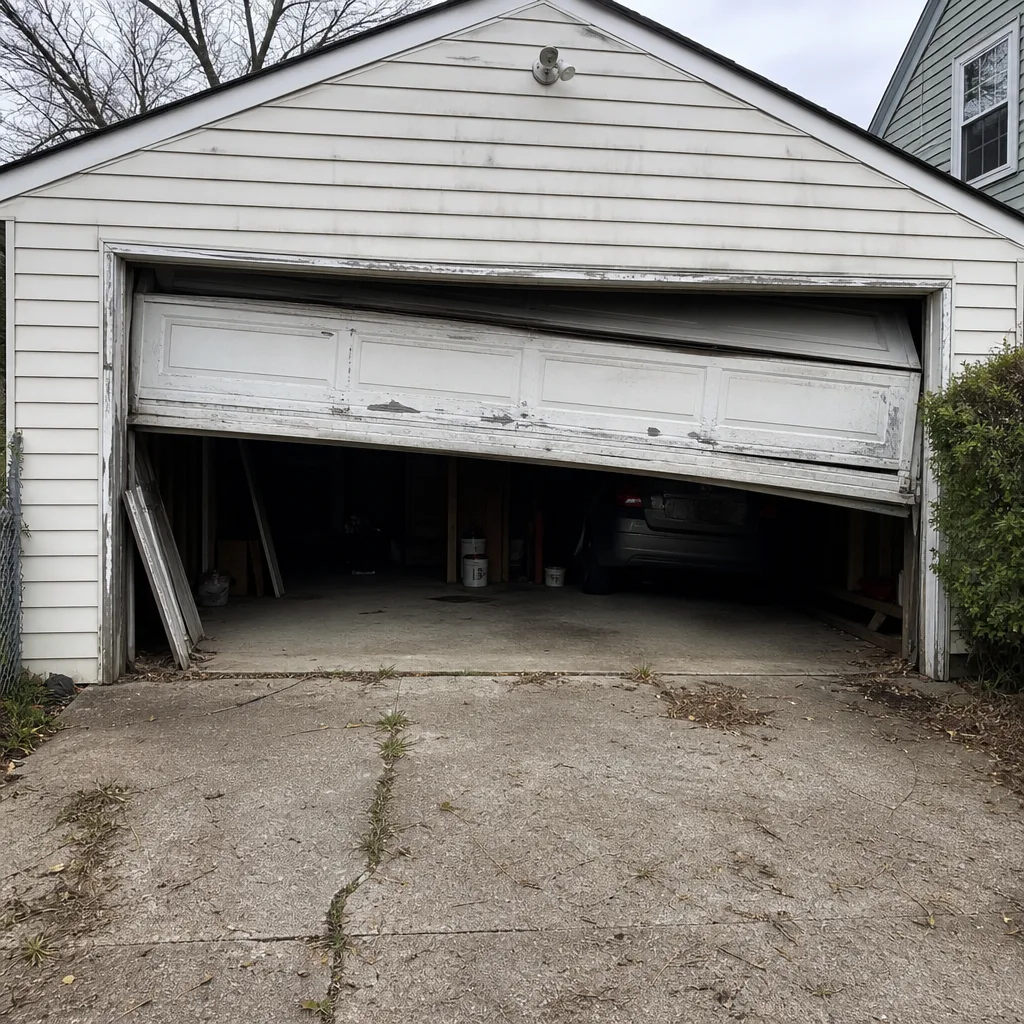 Before
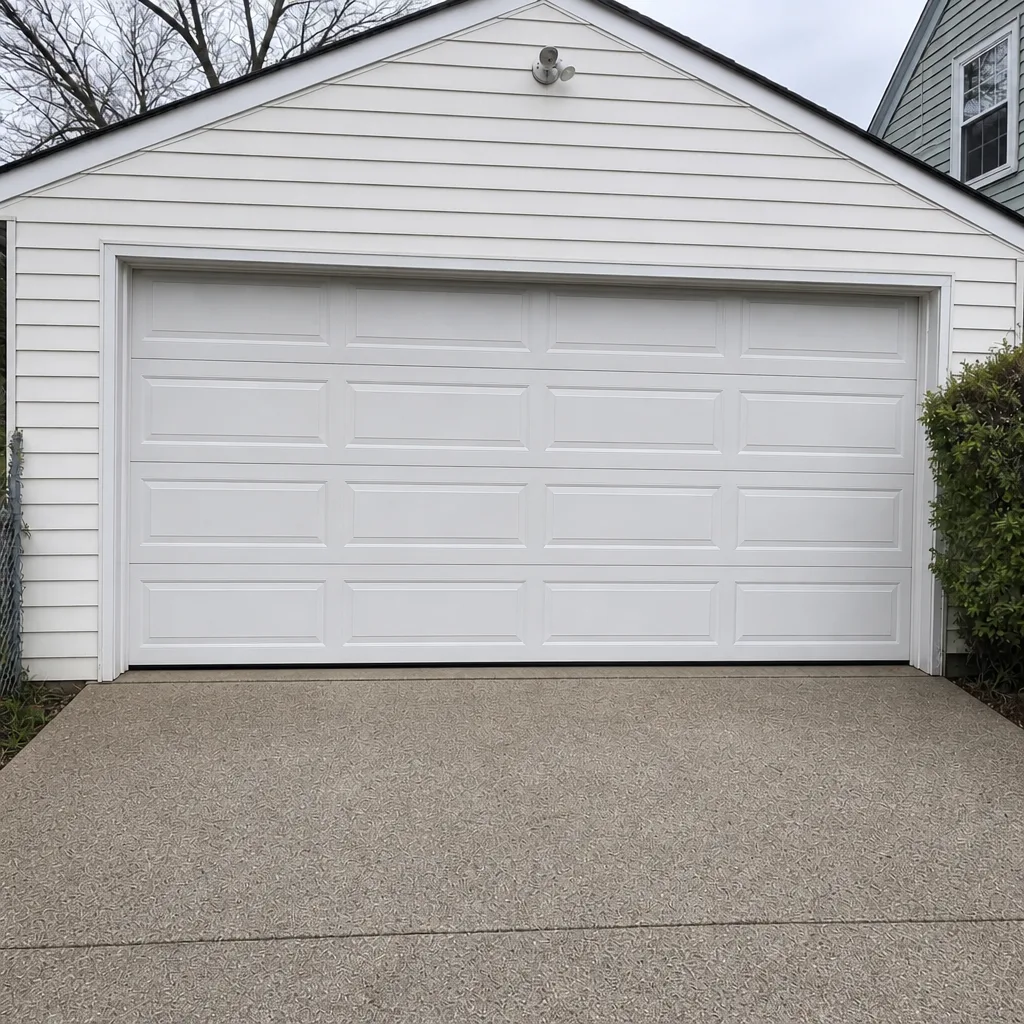 After
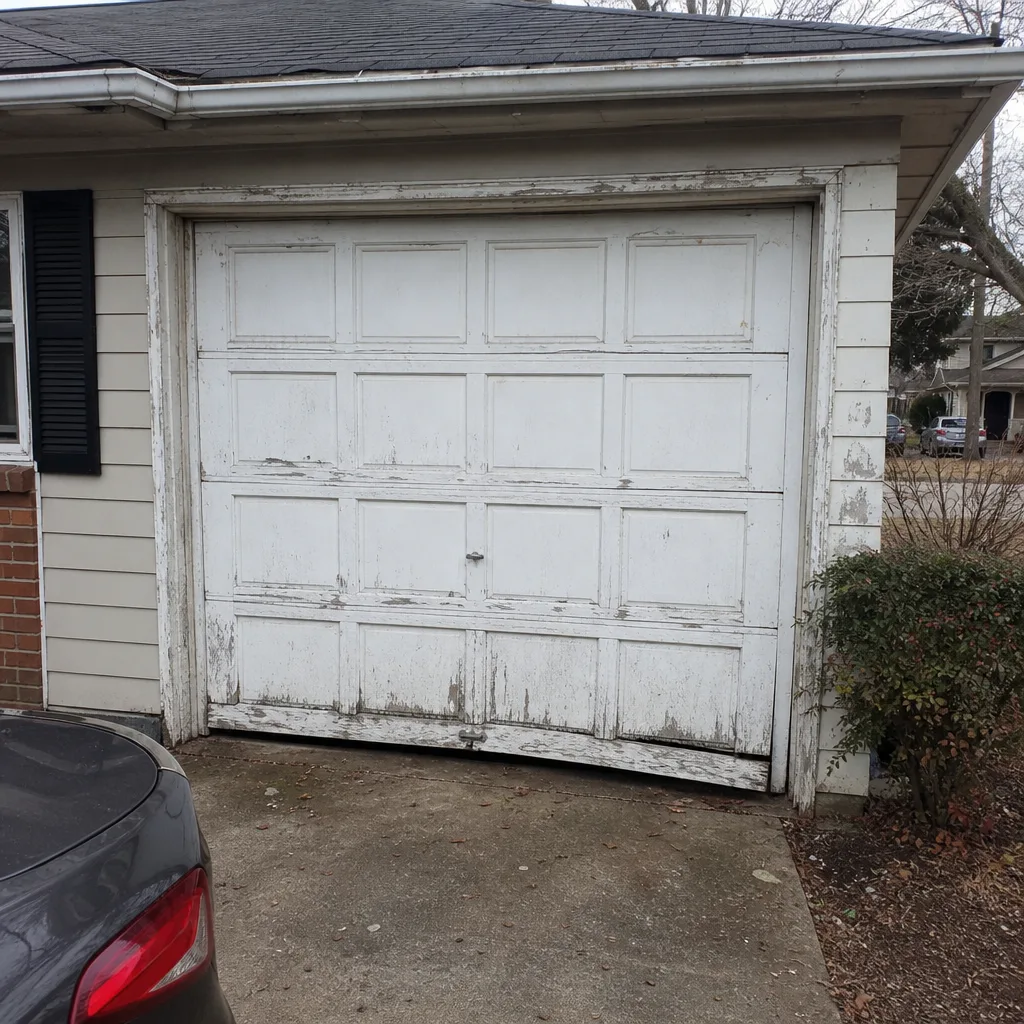 Before
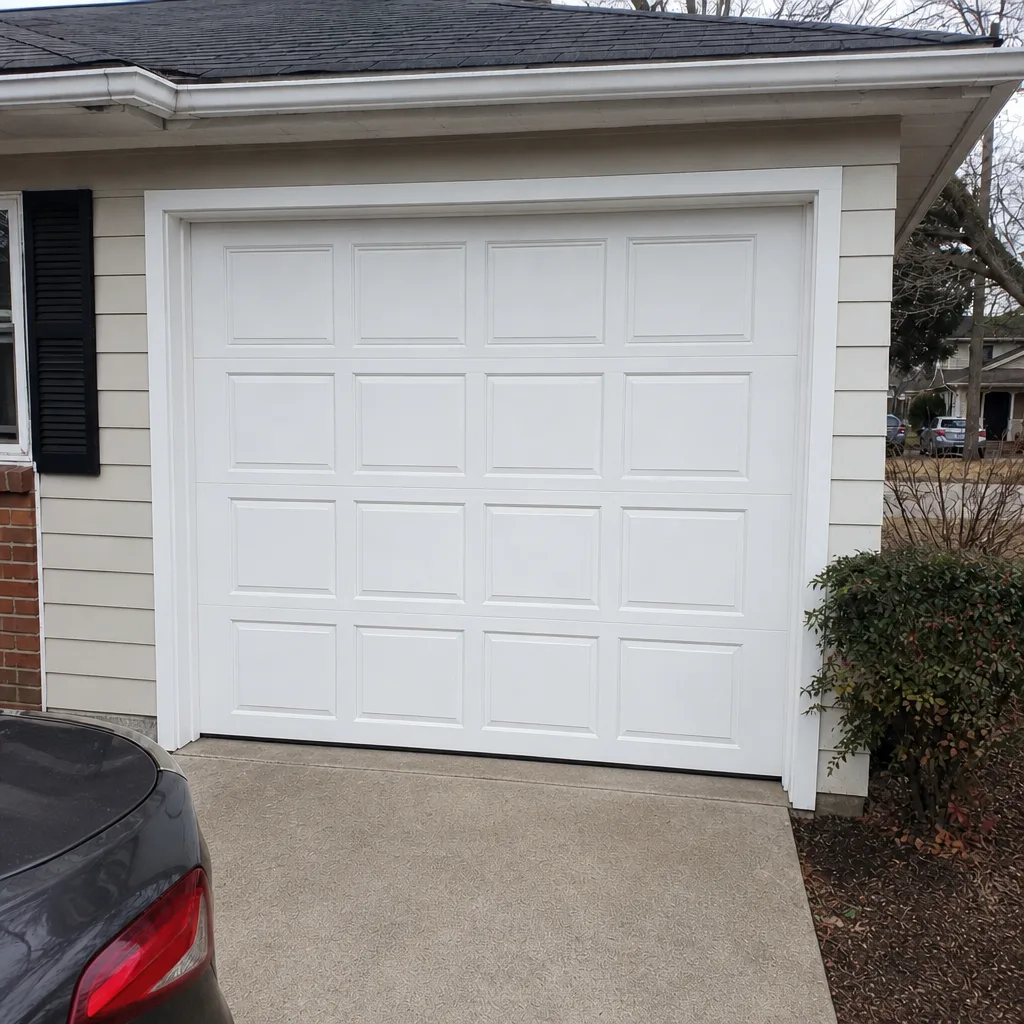 After
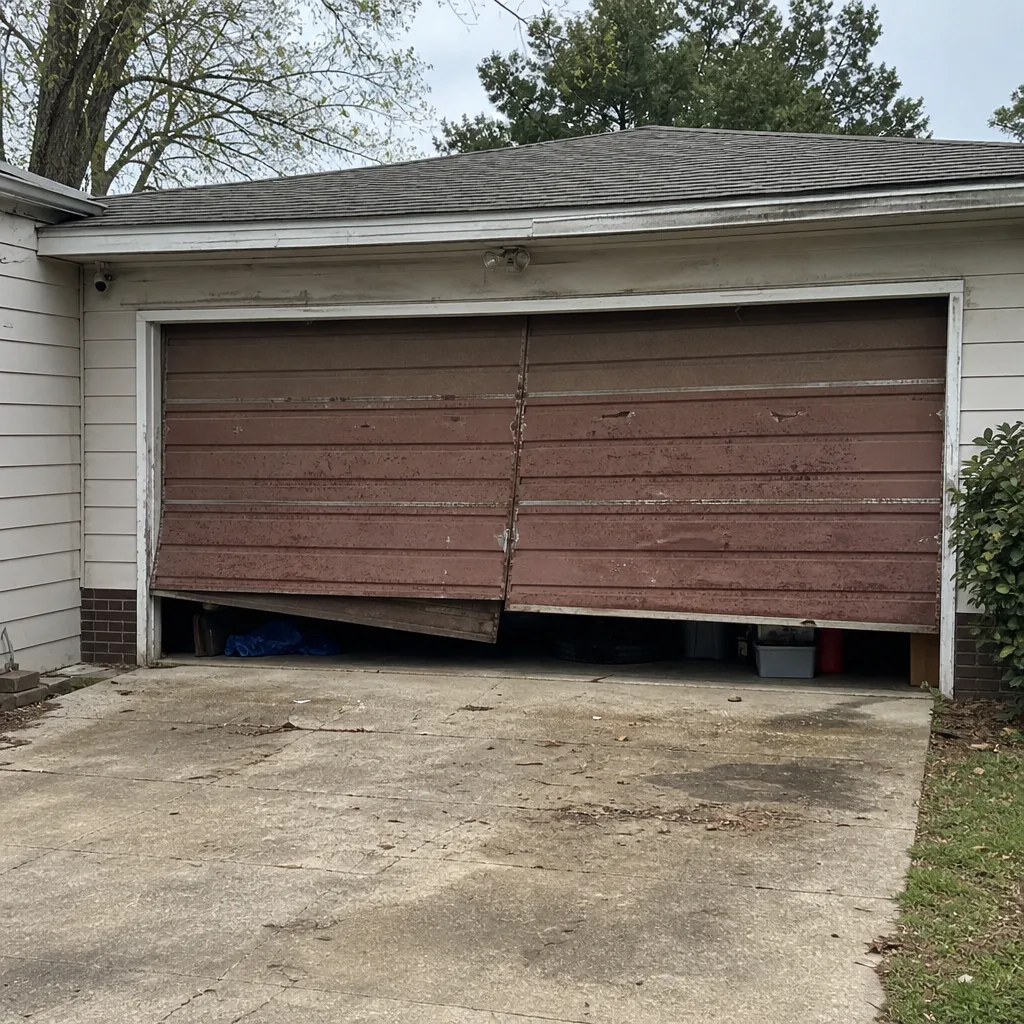 Before
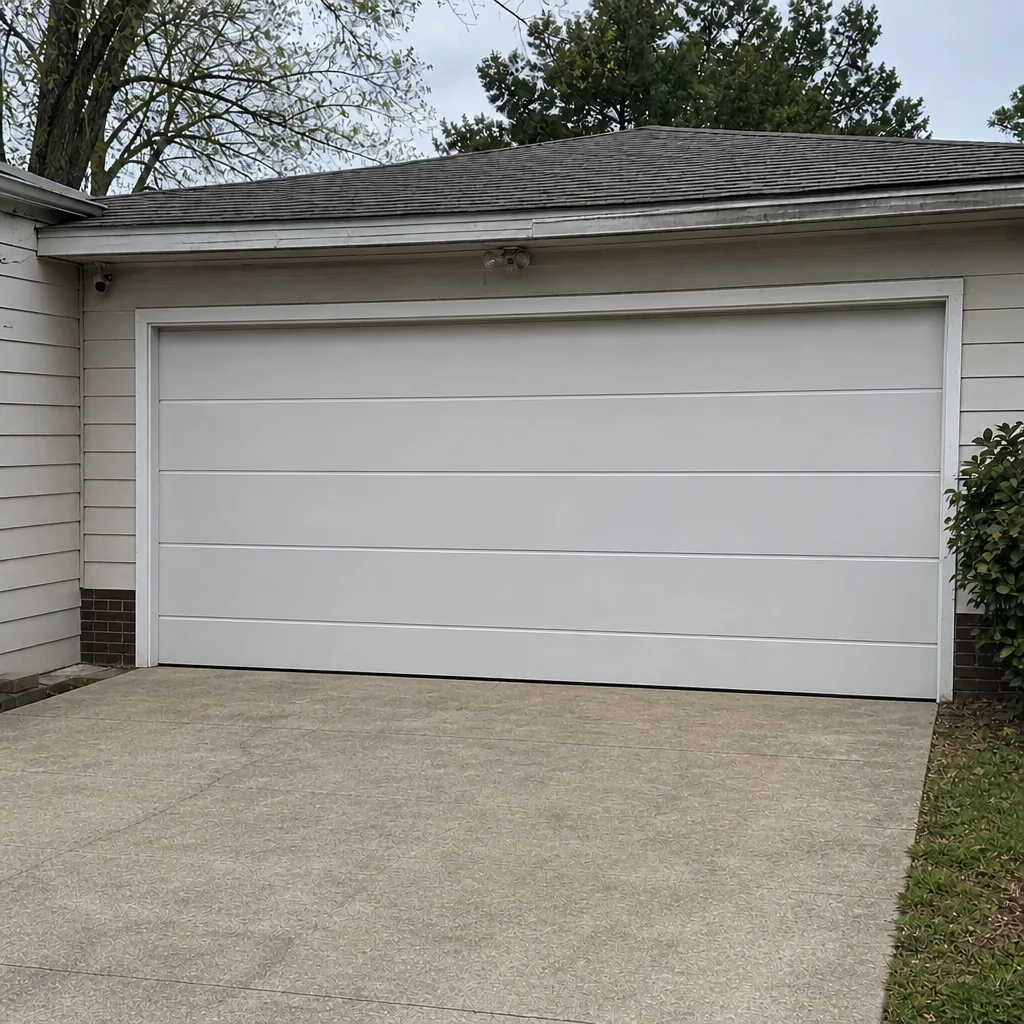 After
When to Call a Professional
Call a professional for anything involving springs, cables, the opener’s electrical internals, a door that’s off its track, a panel that’s been hit hard by a storm or a vehicle, or a door that reverses without an obvious obstruction. Call for any noise you can’t trace. Call before you start a repair that voids a manufacturer warranty. And call if the door is your only vehicle access – a stuck door with a car on the wrong side is more than a repair problem, and it needs a specialist who can work on the actual component, not just the symptom.
If your door is stuck open, the house is exposed. That’s a security issue, and it belongs to an emergency call. Norfolk Garage Door Repair Experts offers free estimates in Norfolk. Our technicians have up to 14 years of experience, we work on every major brand, and we quote a written price before any work begins. Call (844) 443-3797. We answer 24/7. Fast dispatch from 7am to 7pm, Sunday through Friday. When you call, we’ll tell you exactly what to expect – and if it’s a DIY job, we’ll say so.
For a snapshot of what we do and how we approach every brand, see Norfolk Garage Door Repair Experts. For new door and opener selection, our installation service covers the full range, and for anything going wrong with an existing door, repair is where every call usually starts.
Frequently Asked Questions
No, not safely. Torsion and extension springs store lethal kinetic energy, and a slipping winding bar can release that energy in a fraction of a second. Spring work is the highest-risk procedure in garage door service and belongs to a trained specialist regardless of experience with other home repairs.
Spring repair in Norfolk typically falls in a per-spring range that depends on the spring type, size, and door weight, and matched pairs are almost always replaced together, so a pair costs roughly twice the single-spring figure. The written estimate sets the final price, and that price is quoted and agreed before any work starts. Call (844) 443-3797 for an exact quote – estimates are free.
It can. Manufacturer warranties from Clopay, Amarr, and other major brands usually exclude failures caused by improper installation or repair, and spring or opener work done by a homeowner is the most common exclusion. Before starting a repair on a door that’s still under warranty, check the terms with the manufacturer.
Weatherstripping replacement, bottom seal replacement, hinge tightening, safety sensor alignment, remote and keypad programming, and light bulb replacement. These components don’t store energy and can be serviced with basic hand tools and a step ladder. Anything that touches springs, cables, high-voltage wiring, or the door’s balance is not in this category.
Same-day service is usually available for repair and emergency calls. We answer 24/7, and dispatch runs 7am to 7pm, Sunday through Friday. Call (844) 443-3797 and we’ll tell you what’s open today.
We service LiftMaster, Chamberlain, Genie, Craftsman, and the openers that come installed with Clopay, Amarr, Wayne Dalton, and Raynor doors. We’re factory-familiar with all eight brands, including their Wi-Fi and app-connected platforms, so diagnosis of a smart-home issue isn’t guesswork. Call (844) 443-3797 if you’re not sure which brand you have.
The Bottom Line
The DIY-vs-professional question for garage doors comes down to stored energy, component weight, and electrical exposure. Springs, cables, opener internals, and a door off its track are never homeowner work, no matter how handy you are. Seals, weatherstripping, hinge tightening, sensor alignment, and remote programming are yours to handle, and doing them yourself keeps the door in better shape between professional visits. Everything in between is best answered by a diagnosis, and the diagnosis should come before the repair. In Norfolk, where humid summers speed up seal wear and storm season tests every door, the smartest move is to know the lines and stick to them.
If you’ve read this far and the job in front of you is on the “call” side, that call is a free estimate. Norfolk Garage Door Repair Experts specializes in garage doors – repair, opener repair, spring repair, installation, and emergency service. We quote a written price and agree it before any work begins. Call (844) 443-3797 for a free estimate.
Written by the team at Norfolk Garage Door Repair Experts.